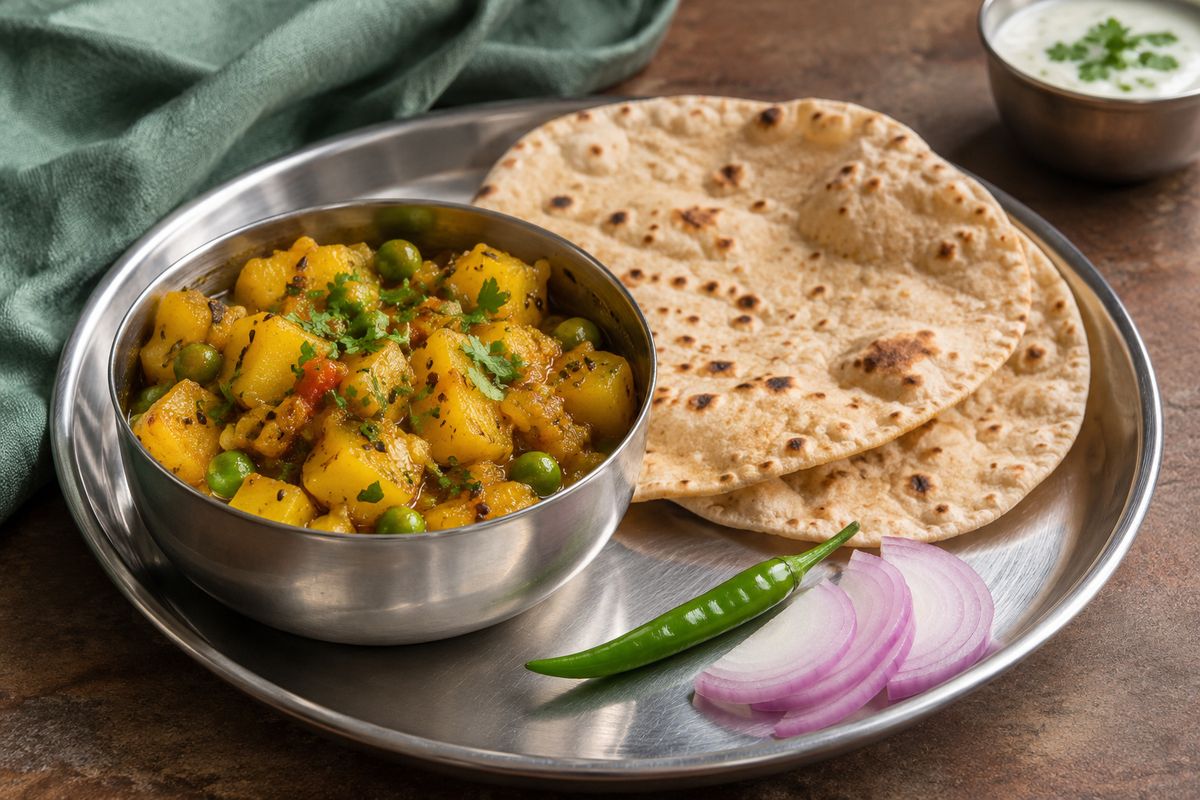
What changes
How this Aloo Sabzi gets lighter
2 teaspoons mustard oil
Instead of: 2 tablespoons
Heat mustard oil until it smokes lightly; its sharp flavour comes through even in a small amount.
Saves about 20 kcal a katori
A cup of peas with the potatoes
Instead of: Potatoes only
Peas add protein and fibre, so each katori has less potato and fills you more.
More protein
Two phulkas
Instead of: Two puris
Puris soak up oil in the kadhai; phulkas go straight from tawa to flame with none.
Saves about 60 kcal a meal
Recipe
How to make healthy Aloo Sabzi
Prep 10 min · Cook 30 min · Serves 8 · each katori (about 100 g)
Ingredients
- 400 g potatoes (3 medium), peeled and cubed
- 1 cup green peas, fresh or frozen
- 2 teaspoons mustard oil
- 1 teaspoon cumin seeds
- 1 medium onion, finely chopped
- 1 medium tomato, chopped
- 1 teaspoon grated ginger
- 1–2 green chillies, slit
- 1 teaspoon turmeric
- 1 teaspoon coriander powder
- 1/2 teaspoon red chilli powder
- Salt to taste
- 1 cup water
- Coriander leaves, to finish
Method
- Heat the mustard oil in a kadhai until it smokes lightly, then lower the heat.
- Add the cumin seeds. When they crackle, add the onion and cook until golden, adding a splash of water if it sticks.
- Add the ginger, chillies and tomato, then the turmeric, coriander and chilli powders. Cook for 2 minutes.
- Add the potatoes and peas and stir to coat them in the masala.
- Add the water and salt. Cover and cook on low for 15–20 minutes until the potatoes are tender.
- Mash a few potato pieces to thicken the gravy. Finish with coriander.
- Serve one katori with two phulkas or a small bowl of rice.
Quick answers
Aloo Sabzi, weight, protein and sugar
Can I eat Aloo Sabzi for weight loss?
A katori is about 70 kcal, so the sabzi itself is light. The bread decides the meal: two phulkas instead of two puris saves about 60 kcal and a lot of frying oil.
How much protein is in it?
About 2.3 g a katori, so it needs a partner. A katori of dal or curd adds 5–6 g; a boiled egg on the side adds about 6 g.
What about sugar?
No added sugar, but potato raises blood sugar quickly. The peas, eating it with dal or curd, and choosing roti over puri all help. If you have diabetes, ask your doctor about portions.
Tips
Before you cook
- Let the mustard oil smoke lightly before adding spices, or it tastes raw.
- Cut the potatoes into even cubes so they cook together.
- Leftovers make a quick roti roll with a spoon of curd.
Common questions
Healthy Aloo Sabzi: common questions
How many calories are in one katori of aloo sabzi?
A 100 g katori of homestyle aloo sabzi has about 90 kcal. With 2 teaspoons of oil and peas added, it is about 70 kcal.
Can I eat aloo sabzi in weight loss?
Yes. Potatoes are not the problem; oil and puris are. Have a katori with phulkas and dal, and keep the oil to a couple of teaspoons.
The classic numbers come from Swastya AI's dish database for a typical home serving. The lighter numbers are estimates for this recipe, worked out from the oil, ghee, sugar and portion it changes. Your own kitchen will differ a little.