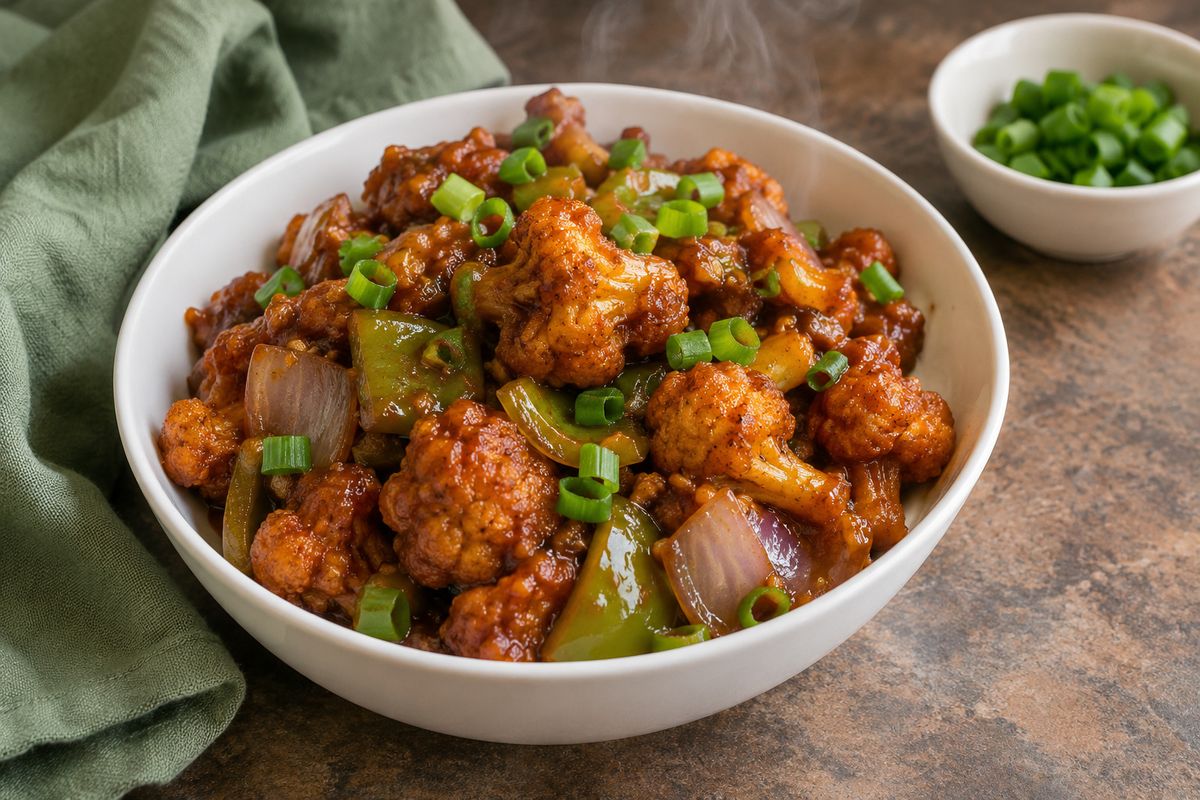
What changes
How this Gobi Manchurian gets lighter
Air-fry or bake the florets
Instead of: Deep-frying in batter
Battered florets soak up a lot of oil. With a thin coat and 2 teaspoons of oil, they crisp at the edges, though less crunchy.
Saves about 70 kcal a katori
A thin cornflour and maida coat
Instead of: A thick maida batter
A light dusting sticks to damp florets and crisps well. Thick batter is mostly flour, and it hides the gobi.
Saves about 60 kcal a katori
2 teaspoons of oil in the sauce
Instead of: 2 tablespoons
Garlic, ginger and onion need only a quick toss on high heat. The flavour comes from soy, vinegar and chilli.
Saves about 30 kcal a katori
1 tablespoon soy sauce, more vinegar
Instead of: 2 tablespoons soy sauce
Half the soy sauce cuts a lot of salt. A splash more vinegar and green chilli keep the flavour sharp.
Less salt
Recipe
How to make healthy Gobi Manchurian
Prep 20 min · Cook 30 min · Serves 5 · each katori (about 150 g)
Ingredients
- For the florets
- 1 medium cauliflower (about 500 g), cut into florets
- 3 tablespoons cornflour
- 2 tablespoons maida
- 1 teaspoon ginger-garlic paste
- 1 teaspoon red chilli powder
- Salt to taste
- 2 teaspoons oil
- For the sauce
- 2 teaspoons oil
- 1 tablespoon garlic, finely chopped
- 1 tablespoon ginger, finely chopped
- 2–3 green chillies, slit
- 1 medium onion, cut into squares
- 1 large capsicum, cut into squares
- 1 tablespoon soy sauce
- 1 tablespoon tomato ketchup
- 2 teaspoons vinegar
- 1 teaspoon red chilli sauce (optional)
- 1 teaspoon cornflour mixed in 1/4 cup water
- 3 tablespoons spring onion greens, chopped
Method
- Coat the florets
- Blanch the florets in boiling salted water for 2 minutes. Drain and pat completely dry.
- Toss with the ginger-garlic paste, chilli powder and salt. Sprinkle over the cornflour and maida with a tablespoon of water, and toss until thinly coated.
- Drizzle with 2 teaspoons of oil and toss again.
- Air-fry at 200°C for 12–15 minutes, shaking twice, until golden and crisp at the edges. Or bake at 220°C for 20–25 minutes on a lined tray, turning once.
- Make the sauce
- Heat 2 teaspoons of oil in a wok on high heat. Stir-fry the garlic, ginger and chillies for 30 seconds.
- Add the onion and capsicum and toss for 2 minutes; they should stay crunchy.
- Add the soy sauce, ketchup, vinegar and chilli sauce. Stir in the cornflour water and cook until glossy, about a minute.
- Toss and serve
- Add the florets and toss for 30 seconds to coat. Finish with spring onion and serve at once, before the coating softens.
Quick answers
Gobi Manchurian, weight, protein and sugar
Can I eat Gobi Manchurian for weight loss?
A katori of restaurant-style gobi manchurian is about 270 kcal; this one is about 120. It works as a side with dal and a phulka. Watch the fried rice or noodles that usually come with it.
How much protein is in it?
Only about 3 g a katori. Pair it with dal, paneer or eggs to make the meal balanced.
What about sugar?
Under 1 g of added sugar a katori, from the ketchup. The coating is starch and raises blood sugar a little; the cauliflower and vegetables slow it. Eat it with dal rather than noodles.
Tips
Before you cook
- Dry the florets well after blanching. Wet florets steam instead of crisping.
- Toss in the sauce only at the end and eat at once; an air-fried coat softens faster than a deep-fried one.
- Want it with gravy? Add 1/2 cup water with the cornflour; the calories barely change.
Common questions
Healthy Gobi Manchurian: common questions
How many calories are in gobi manchurian?
A 150 g katori of deep-fried gobi manchurian has about 270 kcal and 12 g of fat. Air-fried with a thin coat and a light sauce, it is about 120 kcal.
Can I eat gobi manchurian in weight loss?
Yes, the air-fried way. A katori is about 120 kcal. Have it as a side with dal and a phulka rather than a full plate with fried rice.
Order Indo-Chinese often? A lipid profile shows where your cholesterol stands. Read about the test
All healthy recipesThe classic numbers come from Swastya AI's dish database for a typical home serving. The lighter numbers are estimates for this recipe, worked out from the oil, ghee, sugar and portion it changes. Your own kitchen will differ a little.