What changes
How this Haleem gets lighter
1 tablespoon ghee
Instead of: 1/4 cup oil or ghee
Haleem gets its richness from slow-cooked meat and grain. A spoon of ghee for aroma is enough.
Saves about 35 kcal a katori
Baked onions on top
Instead of: A heap of deep-fried onions
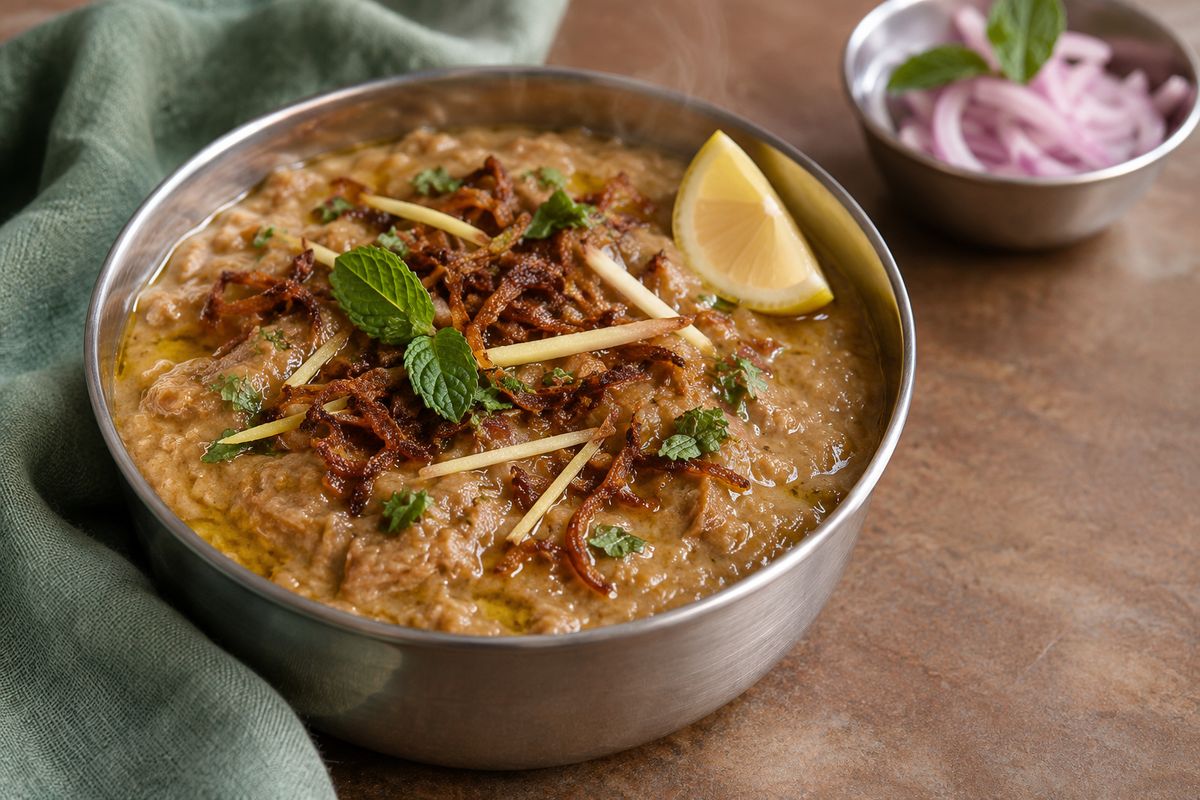
Fried birista is about a third oil. Baked or air-fried onions with a teaspoon of oil still turn crisp and sweet.
Saves about 15 kcal a katori
Lean mutton or skinless chicken
Instead of: Fatty mutton or beef
Trimming the fat keeps the protein and cuts saturated fat. Chicken haleem is a lighter classic too.
Saves about 25 kcal a katori
Mixed dals with the wheat
Instead of: Wheat alone
Hyderabadi haleem traditionally uses chana, moong and masoor dal; they add protein and make it creamier.
More protein
Recipe
How to make healthy Haleem
Prep 20 min, plus 2 hr soaking · Cook 1 hr 30 min · Serves 10 · each katori (150 g)
Ingredients
- 500 g lean boneless mutton, fat trimmed (or skinless chicken)
- 1 cup broken wheat (dalia), soaked for 2 hours
- 1/3 cup mixed dals (chana, moong, masoor), soaked for 1 hour
- 1/2 cup curd
- 1 tablespoon ghee
- 1 teaspoon cumin seeds
- 1 large onion, sliced
- 2 tablespoons ginger-garlic paste
- 3–4 green chillies, slit
- 1/2 teaspoon turmeric
- 1 teaspoon red chilli powder
- 1 teaspoon coriander powder
- 1 teaspoon garam masala
- Salt to taste
- 5–6 cups water
- For the topping
- 1 onion, thinly sliced and tossed in 1 teaspoon oil
- Mint and coriander leaves, ginger juliennes and lemon wedges
Method
- Make the topping first: spread the oiled onion on a tray and bake at 180°C, or air-fry at 160°C, for 12–15 minutes, stirring often, until crisp and brown.
- Heat the ghee in a pressure cooker. Add the cumin, then the sliced onion, and cook until golden.
- Add the ginger-garlic paste and green chillies and cook for 2 minutes. Add the mutton and brown it on all sides.
- Add the turmeric, chilli powder, coriander powder, salt and curd. Cook for 5 minutes.
- Add the drained wheat and dals and 5 cups of water. Pressure-cook for 8–10 whistles on low heat, until the meat is very tender; chicken needs about 4.
- Open the cooker and mash everything with a wooden masher or a hand blender, in short bursts, until thick and stretchy. Add hot water if needed.
- Simmer on low for 10 minutes, stirring, and finish with garam masala.
- Serve in katoris topped with the baked onions, mint, coriander, ginger and lemon.
Quick answers
Haleem, weight, protein and sugar
Can I eat Haleem for weight loss?
A katori of this haleem is about 180 kcal with 14 g protein, so one katori with salad can be a light meal. In Ramzan, have one katori rather than a big bowl topped with fried onions and ghee.
How much protein is in it?
About 14 g a katori, from the meat, wheat and dals. Made with chicken, the protein stays about the same and the fat drops further.
What about sugar?
No added sugar. The broken wheat and dals with the meat raise blood sugar slowly; if you have diabetes, keep to one katori and ask your doctor about portions.
Tips
Before you cook
- Soak the wheat and dals well; they cook down creamier and need less fat.
- Mash in short bursts; haleem should be thick and stretchy, not a smooth paste.
- Freeze extra katoris; haleem reheats well with a splash of hot water.
Common questions
Healthy Haleem: common questions
How many calories are in 1 bowl of haleem?
A 150 g katori of classic haleem has about 240 kcal, and restaurant bowls with ghee and fried onions are often bigger and richer. This lighter version is about 180 kcal a katori.
Is haleem healthy?
It has good protein and fibre from the meat, wheat and dals. The ghee and fried onions are what make it heavy, so make it lean and keep to a katori.
Red meat often on the menu? A uric acid test shows where your levels stand. Read about the test
All healthy recipesThe classic numbers come from Swastya AI's dish database for a typical home serving. The lighter numbers are estimates for this recipe, worked out from the oil, ghee, sugar and portion it changes. Your own kitchen will differ a little.