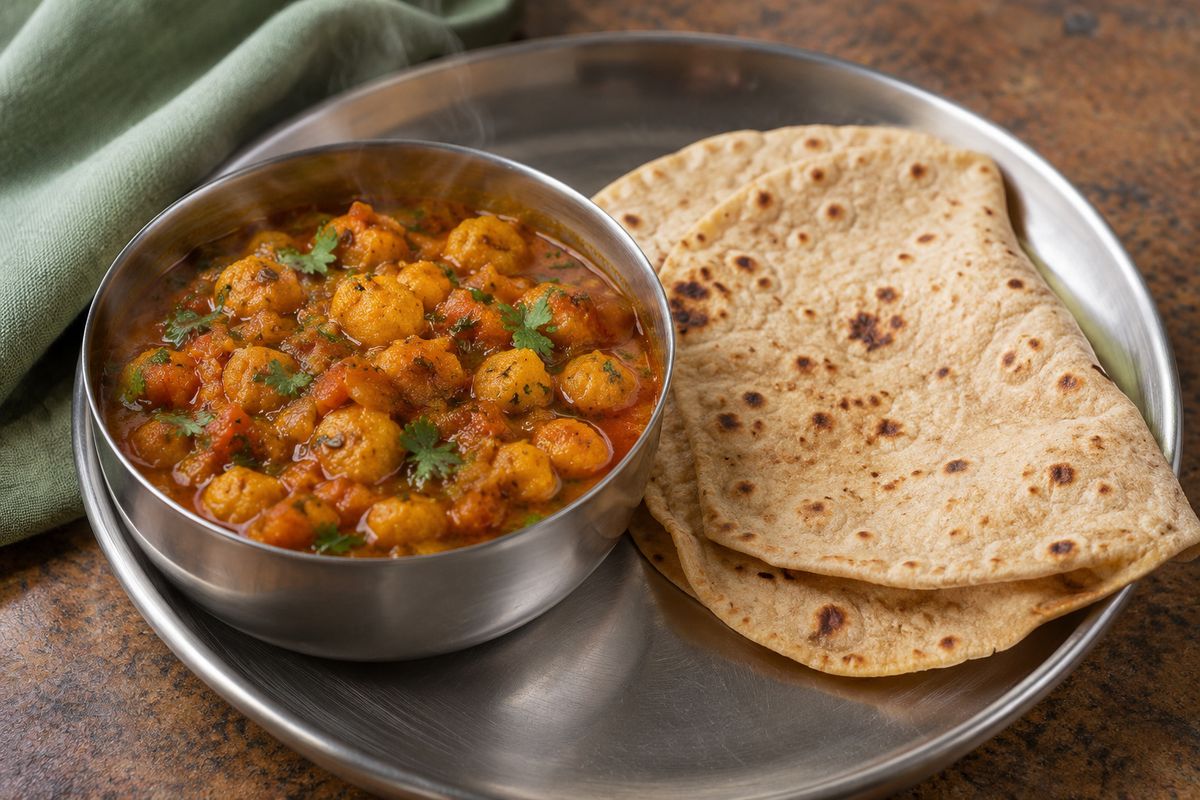
What changes
How this Mangodi ki Sabzi gets lighter
Dry-roast the mangodi
Instead of: Frying them in oil first
Mangodi soak up oil like a sponge. Dry-roasted on low heat, they turn golden and nutty without any.
Saves about 35 kcal a katori, if you usually fry them
2 teaspoons of oil for the gravy
Instead of: 2 tablespoons
The tomato gravy only needs a little oil for the tadka.
Saves about 30 kcal a katori
Phulkas or bajra roti without ghee
Instead of: Rotis smeared with ghee
The sabzi is light; a teaspoon of ghee on each roti adds about 45 kcal.
Saves about 45 kcal a roti
Recipe
How to make healthy Mangodi ki Sabzi
Prep 10 min · Cook 30 min · Serves 5 · each katori (100 g)
Ingredients
- For the sabzi (5 katoris)
- 1 cup moong dal mangodi
- 2 teaspoons oil
- 1 teaspoon cumin seeds
- A pinch of hing
- 1 medium onion, finely chopped (skip for a Jain version)
- 1 teaspoon ginger paste
- 1 teaspoon garlic paste (skip for a Jain version)
- 2 medium tomatoes, pureed
- 1/2 teaspoon turmeric
- 1 teaspoon coriander powder
- 1 teaspoon cumin powder
- 1 teaspoon red chilli powder
- Salt to taste
- 2 cups water
- A handful of coriander leaves
Method
- Dry-roast the mangodi in a heavy kadhai on low heat for 5–6 minutes, stirring, until golden and fragrant. Set aside.
- Heat the oil in the same kadhai. Add the cumin and hing.
- Add the onion and cook until golden, with a splash of water if it sticks. Add the ginger and garlic pastes and cook for a minute.
- Add the tomato puree and cook until thick, 5–6 minutes. Stir in the turmeric, coriander, cumin and chilli powders and salt.
- Add the water, bring to a boil and add the roasted mangodi.
- Cover and simmer on low heat for 15 minutes, until the mangodi are soft and the gravy thickens.
- Finish with coriander and serve with phulkas or bajra roti.
Quick answers
Mangodi ki Sabzi, weight, protein and sugar
Can I eat Mangodi ki Sabzi for weight loss?
Yes. A katori is about 110 kcal with 5–6 g protein. Have it with phulkas or bajra roti and a salad.
How much protein is in it?
About 5.5 g a katori, from the moong dal in the mangodi. A katori of curd or a glass of chaas adds 3–6 g.
What about sugar?
No added sugar. Mangodi are made of moong dal, which raises blood sugar slowly; the rotis with it matter more.
Tips
Before you cook
- Roast the mangodi on low heat; high heat burns them before they turn golden inside.
- Mangodi swell as they cook, so add a little hot water if the gravy gets too thick.
- For a Jain version, skip the onion and garlic and add a pinch more hing.
Common questions
Healthy Mangodi ki Sabzi: common questions
How many calories are in 1 katori of mangodi ki sabzi?
About 120 kcal in a 100 g katori. With dry-roasted mangodi and 2 teaspoons of oil for the pan, it is about 110 kcal.
Is mangodi ki sabzi healthy?
Yes. Mangodi are sun-dried moong dal, so they bring protein and fibre. Roast them dry instead of frying, and keep the oil low.
The classic numbers come from Swastya AI's dish database for a typical home serving. The lighter numbers are estimates for this recipe, worked out from the oil, ghee, sugar and portion it changes. Your own kitchen will differ a little.