What changes
How this Matar Ghugni gets lighter
2 teaspoons of mustard oil
Instead of: 2 tablespoons
The peas cook soft in their own gravy. Heat the oil till it smokes, and the little you use carries the mustard flavour.
Saves about 25 kcal a katori
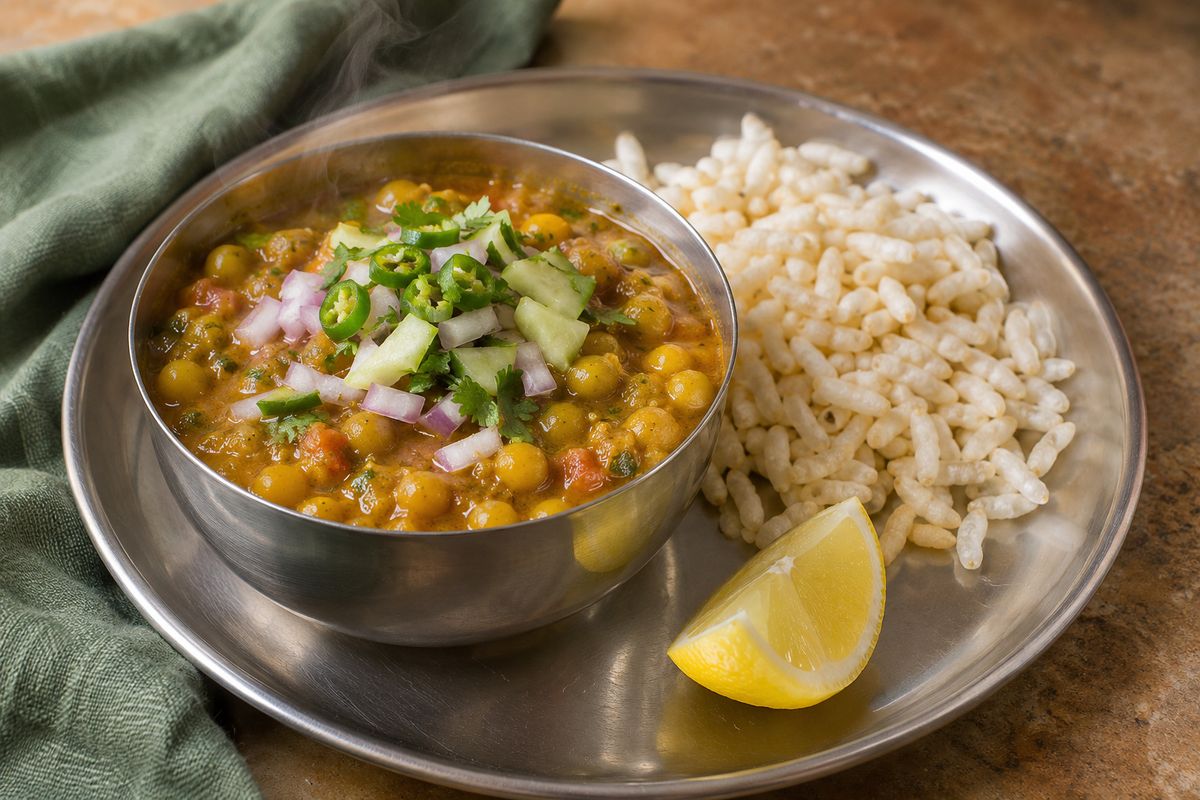
Raw onion, cucumber, green chilli and lemon on top
Instead of: Sev or fried papdi on top
The street way: fresh crunch and tang for very few calories.
Saves about 50 kcal a katori
Mash a ladle of peas into the gravy
Instead of: Adding oil or flour to thicken it
Mashed peas make the gravy thick and creamy on their own.
No extra calories
Ghugni with a small bowl of muri or 1 roti
Instead of: Ghugni with puris
Puris are fried and add about 100 kcal each. Puffed rice or a roti keeps the meal light.
Saves about 150 kcal a meal
Recipe
How to make healthy Matar Ghugni
Prep 15 min, plus overnight soaking · Cook 40 min · Serves 6 · each katori (about 150 g)
Ingredients
- 1 cup dried white or yellow peas (vatana), soaked overnight
- 2 teaspoons mustard oil
- 1 teaspoon cumin seeds
- 1 bay leaf
- 1 medium onion, finely chopped
- 1 teaspoon ginger-garlic paste
- 1–2 green chillies, slit
- 1 large tomato, finely chopped
- 1/2 teaspoon turmeric
- 1 teaspoon coriander powder
- 1 teaspoon roasted cumin powder
- 1 teaspoon garam masala
- Salt to taste
- To top
- 1 small onion, finely chopped
- 1/2 cucumber, finely chopped
- Green chillies, coriander and lemon wedges
Method
- Drain the soaked peas and pressure-cook them with 2½ cups of water and a pinch of turmeric and salt for 3–4 whistles, until soft but whole.
- Heat the mustard oil in a kadhai until it just smokes, then lower the heat. Add the cumin and bay leaf.
- Add the onion and cook until golden, adding a splash of water if it sticks. Add the ginger-garlic paste and green chillies and cook for a minute.
- Add the tomato, turmeric and coriander powder, and cook until soft and jammy.
- Add the peas with their cooking water. Mash a ladleful against the side of the pan and simmer for 10 minutes, until the gravy thickens.
- Stir in the roasted cumin and garam masala and adjust the salt.
- Serve hot in katoris, topped with raw onion, cucumber, green chilli, coriander and a squeeze of lemon.
Quick answers
Matar Ghugni, weight, protein and sugar
Can I eat Matar Ghugni for weight loss?
About 140 kcal a katori, high in fibre and filling. As an evening snack with a little muri, it beats samosas and pakoras.
How much protein is in it?
About 8 g a katori. Have 1½ katoris as a meal, or add a katori of curd, for about 12 g.
What about sugar?
No added sugar. Dried peas raise blood sugar slowly, thanks to their fibre and protein. If you have diabetes, ask your doctor about the puri or rice you have with it.
Tips
Before you cook
- Soak the peas overnight; they cook evenly and are easier to digest.
- Dry-roast cumin seeds and crush them fresh. Roasted cumin is the main flavour of street ghugni.
- Ghugni keeps for 2 days in the fridge; add the raw toppings only when serving.
Common questions
Healthy Matar Ghugni: common questions
How many calories are in 1 katori of ghugni?
A 150 g katori of classic matar ghugni has about 165 kcal. Made with 2 teaspoons of oil for the pot, it is about 140 kcal.
Is ghugni good for weight loss?
Yes. It is high in fibre and has some protein. Keep the oil low, top it with raw vegetables instead of sev, and skip the puris.
Peas and dals on your plate often? A haemoglobin test shows how your iron is doing. Read about the test
All healthy recipesThe classic numbers come from Swastya AI's dish database for a typical home serving. The lighter numbers are estimates for this recipe, worked out from the oil, ghee, sugar and portion it changes. Your own kitchen will differ a little.