What changes
How this Misal Pav gets lighter
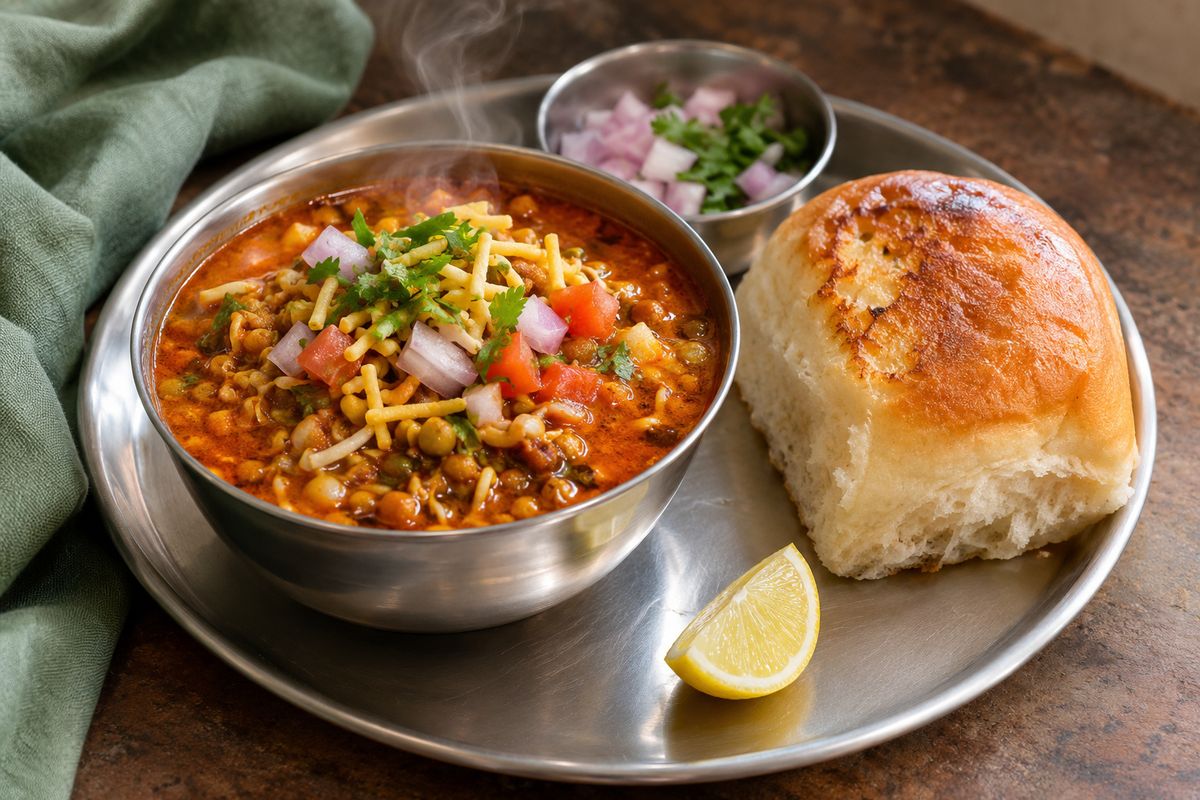
One small pav, toasted dry
Instead of: Two pav fried in butter
Butter-toasted pav carries about 35 kcal of butter each, and the second pav is mostly refined flour.
Saves about 200 kcal a plate
2 teaspoons of oil for the pot, no tarri
Instead of: 2 tablespoons plus a ladle of red oil on top
The red tarri layer is mostly oil. A thin, spicy gravy made with less oil has the same kick.
Saves about 40 kcal a plate, more if you skip the tarri
Onion, tomato, coriander, lemon and 1 teaspoon farsan
Instead of: A big handful of farsan
Farsan is fried besan and nuts, about 55 kcal a tablespoon. A teaspoon still gives the crunch.
Saves about 150 kcal a plate
A katori of curd alongside, dahi misal style
Instead of: An extra pav
Curd cools the spice and adds about 6 g of protein.
More protein
Recipe
How to make healthy Misal Pav
Prep 20 min, plus 1–2 days soaking and sprouting · Cook 25 min · Serves 4 · each plate (bowl of misal with 1 small pav, about 370 g)
Ingredients
- For the usal (4 plates)
- 1 cup moth beans (matki), sprouted (about 2½ cups sprouts)
- 2 teaspoons oil
- 1/2 teaspoon mustard seeds
- 1/2 teaspoon cumin seeds
- A pinch of hing
- 8–10 curry leaves
- 1 medium onion, finely chopped
- 1 medium tomato, finely chopped
- 1 tablespoon ginger-garlic paste
- 2 green chillies, slit
- 1/2 teaspoon turmeric
- 1 teaspoon red chilli powder
- 2 teaspoons misal or goda masala
- 1/2 teaspoon garam masala
- Salt to taste
- 3 cups water
- To serve
- 4 small pav, whole-wheat if you can find them
- 1 onion and 1 tomato, finely chopped
- A handful of coriander leaves
- 4 teaspoons farsan
- 1 lemon, cut into wedges
Method
- Rinse the sprouts and pressure-cook them with 1 cup of water for 1 whistle, until just soft. Keep the water.
- Heat the oil in a pot. Add the mustard and cumin seeds, then the hing and curry leaves.
- Add the onion and cook until soft, then the ginger-garlic paste and green chillies for a minute.
- Add the tomato, turmeric, chilli powder, misal masala and salt. Cook until the tomato breaks down, adding a splash of water instead of oil.
- Add the sprouts with their water and 2 more cups of water. Simmer for 10 minutes into a thin, spicy gravy, then stir in the garam masala.
- Toast the pav on a dry tawa until warm and crisp at the edges.
- Ladle the misal into bowls and top each with onion, tomato, coriander and 1 teaspoon of farsan.
- Serve with one pav and a lemon wedge.
Quick answers
Misal Pav, weight, protein and sugar
Can I eat Misal Pav for weight loss?
Yes, as a filling breakfast or lunch. This plate is about 340 kcal with 16 g protein. Misal's calories hide in the pav, butter, tarri and farsan, so go light on all four.
How much protein is in it?
About 16 g a plate, mostly from the sprouted matki. A katori of curd on the side adds about 6 g.
What about sugar?
Almost no added sugar. Sprouted matki raises blood sugar slowly; pav raises it fast, so one small pav is better than two. If you have diabetes, ask your doctor about pav.
Tips
Before you cook
- Sprout the matki for a full day; well-sprouted beans cook faster and taste sweeter.
- Use a good goda or Kolhapuri masala for the misal taste instead of extra oil.
- Want it spicier? Add chilli powder to the gravy, not a ladle of tarri.
Common questions
Healthy Misal Pav: common questions
How many calories are in 1 plate of misal pav?
A home-style 300 g plate has about 360 kcal and 19 g protein. This lighter plate is about 340 kcal. A restaurant plate with buttered pav, tarri and farsan can top 600 kcal.
Is misal pav healthy?
The usal is: sprouted beans with protein and fibre. Keep to one pav, skip the butter and tarri, and use farsan as a sprinkle.
Count on sprouts and dals for iron? A haemoglobin test shows how your levels are doing. Read about the test
All healthy recipesThe classic numbers come from Swastya AI's dish database for a typical home serving. The lighter numbers are estimates for this recipe, worked out from the oil, ghee, sugar and portion it changes. Your own kitchen will differ a little.