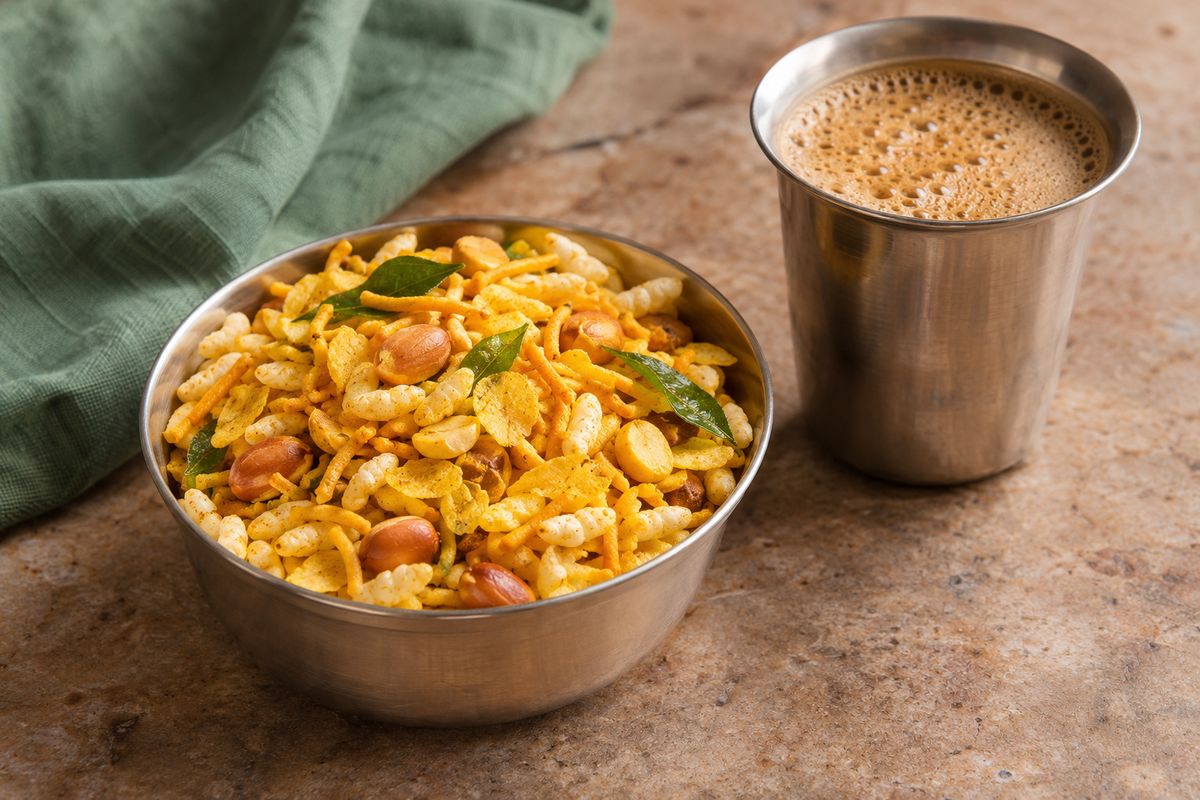
What changes
How this Mixture gets lighter
Roasted chana (pottukadalai)
Instead of: Fried moong dal
Roasted gram gives the same crunch and more protein, with a fraction of the fat of fried dal.
More protein, less fat
Dry-roasted thin poha and puffed rice
Instead of: Fried poha and boondi
Roasted in a dry kadhai, they turn crisp and light. Frying makes them soak up oil.
Saves about 15 kcal a handful
2 tablespoons of sev
Instead of: Half a cup
Keep a little sev for the familiar taste. It is the oiliest part of the mix.
Saves about 10 kcal a handful
A small katori, then close the dabba
Instead of: Eating from the dabba
Mixture stays dense even roasted, about 4 kcal a gram. Two extra handfuls add up to a meal.
Saves about 130 kcal a sitting
Recipe
How to make healthy Mixture
Prep 10 min · Cook 15 min · Makes 7 · each handful (about 30 g)
Ingredients
- 2 teaspoons oil
- 1 teaspoon mustard seeds
- 2 sprigs curry leaves
- 2 green chillies, finely chopped, or 1 teaspoon red chilli powder
- 1/4 teaspoon turmeric
- A pinch of hing
- 1 cup thin poha
- 3 cups puffed rice (kurmura)
- 1/4 cup roasted peanuts
- 1/2 cup roasted chana (pottukadalai)
- 2 tablespoons sev
- 1/2 teaspoon chaat masala
- Salt to taste
Method
- Dry-roast the poha in a wide kadhai on low heat for 6–8 minutes, stirring, until crisp. Tip into a large bowl.
- Dry-roast the puffed rice for 2–3 minutes until crisp. Add it to the bowl.
- Heat the oil in the kadhai. Add the mustard seeds; when they splutter, add the curry leaves, chillies, turmeric and hing and fry until the leaves are crisp.
- Add the peanuts and roasted chana and stir for a minute.
- Turn off the heat. Add the poha and puffed rice, sprinkle over the chaat masala and salt, and toss well to coat.
- Cool completely, then mix in the sev.
- Store in an airtight jar. Serve a small katori at a time.
Quick answers
Mixture, weight, protein and sugar
Can I eat Mixture for weight loss?
Even roasted, mixture is dense: about 130 kcal a handful against 144. One small katori with tea is a fair snack. Eating from the dabba is where it goes wrong.
How much protein is in it?
About 4 g a handful, from the roasted chana and peanuts. A few more roasted chana add an extra gram or two.
What about sugar?
No added sugar. Poha and puffed rice raise blood sugar quickly, while the chana and peanuts slow it. Keep it to a small katori, and if you have diabetes, ask your doctor.
Tips
Before you cook
- Roast the poha on low heat until it crunches between your teeth; soft poha goes stale fast.
- Cool fully before storing, or the steam makes it soggy.
- Make small batches so it stays crisp and a big jar doesn't tempt you.
Common questions
Healthy Mixture: common questions
How many calories are in mixture?
Fried South Indian mixture has about 480 kcal per 100 g, so a 30 g handful is about 144 kcal. This roasted mix is about 130 kcal a handful.
Can I eat mixture in weight loss?
A small katori now and then. Choose the roasted mix, measure one handful (about 130 kcal), and have it with tea in place of biscuits, not on top of them.
Namkeen with tea every day? A lipid profile shows where your cholesterol stands. Read about the test
All healthy recipesThe classic numbers come from Swastya AI's dish database for a typical home serving. The lighter numbers are estimates for this recipe, worked out from the oil, ghee, sugar and portion it changes. Your own kitchen will differ a little.