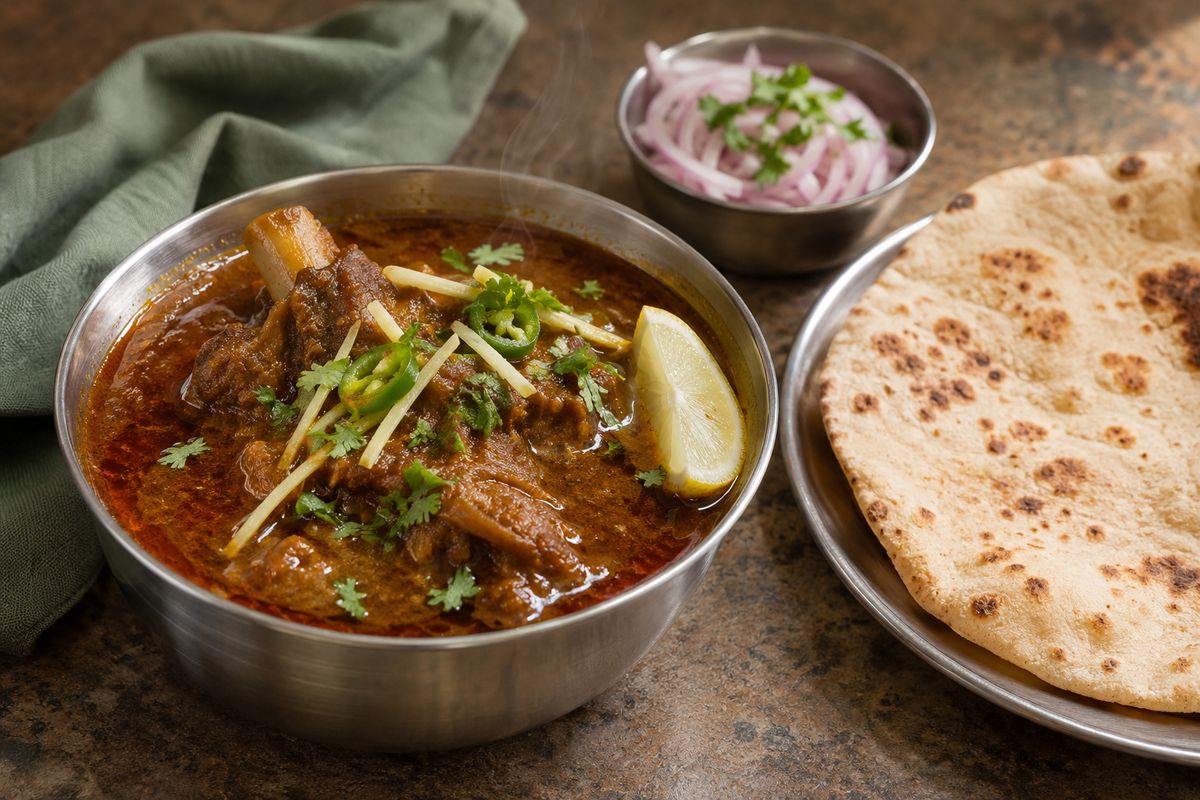
What changes
How this Nihari gets lighter
Lean shank, visible fat trimmed
Instead of: Fatty brisket
Shank turns meltingly soft with slow cooking and has far less fat than brisket. Its sinew gives the gravy body.
Saves about 30 kcal a katori
1 tablespoon of ghee
Instead of: 1/4 cup
The onions and spices need only a tablespoon to bloom. Long, slow cooking does the rest.
Saves about 35 kcal a katori
Chill and skim the tari
Instead of: Serving it with the fat layer
Nihari's red fat layer, the tari, sets on top as it cools. Lift most of it off and keep a spoon for colour.
Saves about 10 kcal a katori
One plain roti or two phulkas
Instead of: Two sheermal or naan
Nihari is often eaten with rich breads. A plain roti with lots of ginger, chilli and lemon keeps the meal lighter.
Saves about 250 kcal a meal
Recipe
How to make healthy Nihari
Prep 20 min · Cook 2 hr 30 min, or 1 hr in a pressure cooker · Serves 10 · each katori (about 150 g, with 2–3 pieces of meat)
Ingredients
- 1 kg boneless beef shank, cut into large pieces, visible fat trimmed
- 1 tablespoon ghee
- 2 medium onions, thinly sliced
- 2 tablespoons ginger-garlic paste
- 2 teaspoons red chilli powder
- 1 teaspoon turmeric
- 2 teaspoons coriander powder
- 1 teaspoon cumin powder
- 1 tablespoon nihari masala or garam masala
- 1 teaspoon salt, or to taste
- 6 cups water
- 2 tablespoons atta, dry-roasted and mixed with 1/2 cup water
- To finish
- 1-inch piece of ginger, cut into thin strips
- 2–3 green chillies, slit
- A handful of coriander leaves
- Lemon wedges
Method
- Heat the ghee in a heavy pot or pressure cooker. Cook the onions on medium heat until golden, adding a splash of water if they stick.
- Add the ginger-garlic paste and cook for 2 minutes, until the raw smell goes.
- Add the meat and brown it on all sides for 6–8 minutes.
- Stir in the chilli powder, turmeric, coriander, cumin, nihari masala and salt for a minute.
- Pour in the water. Cover and simmer on the lowest heat for 2–2½ hours, or pressure-cook for 45–50 minutes, until the meat is very tender.
- Let it cool, then lift most of the fat layer off the top with a spoon.
- Bring back to a simmer. Stir in the atta water and cook for 10–15 minutes, stirring, until the gravy is silky and thick.
- Serve hot, topped with ginger, green chillies, coriander and a squeeze of lemon.
Quick answers
Nihari, weight, protein and sugar
Can I eat Nihari for weight loss?
A classic katori is about 225 kcal; this one is about 170 with 21 g of protein. With one roti and lots of ginger and lemon, it is a fair weekend meal. The rich breads and the tari are where calories pile up.
How much protein is in it?
About 21 g a katori, mostly from the beef. Eat the meat, not just the gravy; that is where the protein is.
What about sugar?
No added sugar and only about 5 g of carbs a katori. Nihari barely moves blood sugar; the naan or sheermal with it matters more.
Tips
Before you cook
- Chill the nihari overnight; the fat sets in a layer that is easy to lift off.
- Roast the atta in a dry pan until it smells nutty before mixing it with water; it thickens the gravy without extra ghee.
- Shank needs slow cooking. If the meat is not falling apart, give it more time, not more fat.
Common questions
Healthy Nihari: common questions
How many calories are in 1 katori of nihari?
A 150 g katori of nihari has about 225 kcal and 14 g of fat. Made with lean shank, a tablespoon of ghee and the fat skimmed, it is about 170 kcal with 21 g of protein.
Can I eat nihari in weight loss?
Occasionally. A katori of lighter nihari is about 170 kcal and high in protein. Have it with one plain roti, skim the fat, and skip the sheermal.
Nihari a weekend favourite? A uric acid test shows where your levels stand. Read about the test
All healthy recipesThe classic numbers come from Swastya AI's dish database for a typical home serving. The lighter numbers are estimates for this recipe, worked out from the oil, ghee, sugar and portion it changes. Your own kitchen will differ a little.