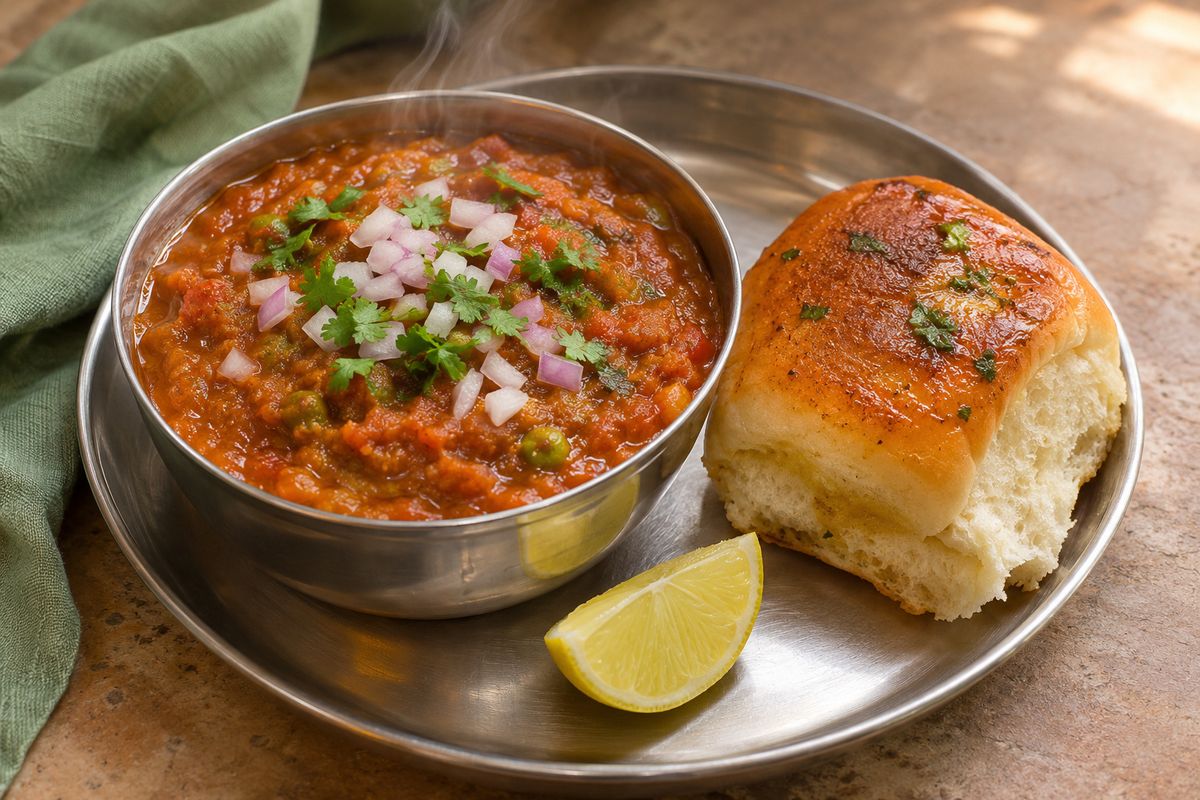
What changes
How this Pav Bhaji gets lighter
1 tablespoon butter and 1 teaspoon oil for the whole pot
Instead of: 3–4 tablespoons butter or oil
Mash the vegetables well and cook the masala long; the butter is for aroma, and a tablespoon gives plenty.
Saves about 50 kcal a plate
Half potato, half cauliflower and extra peas
Instead of: Mostly potato
Mumbai street bhaji often has cauliflower; it mashes in smoothly and adds volume for fewer calories. Peas add protein.
Saves about 30 kcal a plate
One pav with a bigger bowl of bhaji
Instead of: Two pav
The bhaji is mostly vegetables; the second pav is refined flour and butter.
Saves about 130 kcal a plate
Pav toasted with 1/2 teaspoon butter
Instead of: Pav fried in a spoon of butter
A hot tawa toasts it golden; brush the butter on rather than letting the pav soak it up.
Saves about 30 kcal a pav
Recipe
How to make healthy Pav Bhaji
Prep 20 min · Cook 35 min · Serves 5 · each plate (1 pav and a big bowl of bhaji, about 300 g)
Ingredients
- For the bhaji
- 2 medium potatoes (250 g), peeled and cubed
- 1/2 small cauliflower (250 g), cut into florets
- 2 cups green peas
- 1 tablespoon butter
- 1 teaspoon oil
- 2 medium onions, finely chopped
- 1 tablespoon ginger-garlic paste
- 2 green chillies, finely chopped
- 1 capsicum, finely chopped
- 4 medium tomatoes, finely chopped
- 2 tablespoons pav bhaji masala
- 1 teaspoon Kashmiri red chilli powder
- 1/2 teaspoon turmeric
- Salt to taste
- 1 tablespoon lemon juice
- Coriander leaves, chopped
- To serve
- 5 pav (whole-wheat if you can find it)
- 2½ teaspoons butter, for the pav
- 1 onion, finely chopped, and lemon wedges
Method
- Pressure-cook the potatoes, cauliflower and peas with 1 cup of water for 2–3 whistles until soft. Mash well.
- Heat the butter and oil in a wide pan. Cook the onions until soft, adding a splash of water if they stick.
- Add the ginger-garlic paste and chillies, then the capsicum, and cook for 3 minutes.
- Add the tomatoes and cook, mashing, until they break down completely, 6–8 minutes.
- Add the pav bhaji masala, chilli powder, turmeric and salt and cook for 2 minutes.
- Add the mashed vegetables with their water. Mash everything together and simmer for 8–10 minutes, adding water for a soft, spoonable bhaji.
- Stir in the lemon juice and coriander.
- Slit the pav, brush each with 1/2 teaspoon of butter and toast on a hot tawa until golden.
- Serve one pav with a big bowl of bhaji, chopped onion and a lemon wedge.
Quick answers
Pav Bhaji, weight, protein and sugar
Can I eat Pav Bhaji for weight loss?
A classic plate with two buttered pav is about 450 kcal; this plate is about 310. Make it your main meal, eat the bhaji first and stop at one pav.
How much protein is in it?
About 10 g a plate, from the peas and pav. A glass of chaas adds about 3 g; a katori of curd about 6 g.
What about sugar?
Almost no added sugar, but pav is refined flour and potato is starchy, so blood sugar rises fast. More vegetables, one pav and eating the bhaji first help. If you have diabetes, ask your doctor how often it fits.
Tips
Before you cook
- Mash the vegetables well; a smooth bhaji needs less butter to taste rich.
- Cook the tomatoes down fully; that is where the street flavour comes from.
- Whole-wheat pav is sold in many cities now and has more fibre.
Common questions
Healthy Pav Bhaji: common questions
How many calories are in one plate of pav bhaji?
A 300 g plate with two buttered pav and bhaji has about 450 kcal. This lighter plate with one pav and more vegetable bhaji has about 310 kcal.
Can I eat pav bhaji in weight loss?
Yes, now and then. Load the bhaji with vegetables, use a tablespoon of butter for the whole pot and have one pav with a big bowl of bhaji.
Love buttery street food? A lipid profile shows where your cholesterol stands. Read about the test
All healthy recipesThe classic numbers come from Swastya AI's dish database for a typical home serving. The lighter numbers are estimates for this recipe, worked out from the oil, ghee, sugar and portion it changes. Your own kitchen will differ a little.