What changes
How this Pongal gets lighter
1/2 cup rice with 2/3 cup moong dal
Instead of: 1 cup rice with 1/2 cup moong dal
More dal makes pongal softer and creamier, with more protein and a slower rise in blood sugar.
More protein
2 teaspoons of ghee for the tempering
Instead of: A tablespoon, plus more on top
Pepper, cumin, ginger and curry leaves carry the flavour; a little ghee is enough to bloom them.
Saves about 10 kcal a bowl, more if you skip ghee on top
6 cashews for the pot
Instead of: 10–12 cashews and grated coconut
A few cashews still give crunch, and the coconut isn't needed with this much dal.
Saves about 15 kcal a bowl
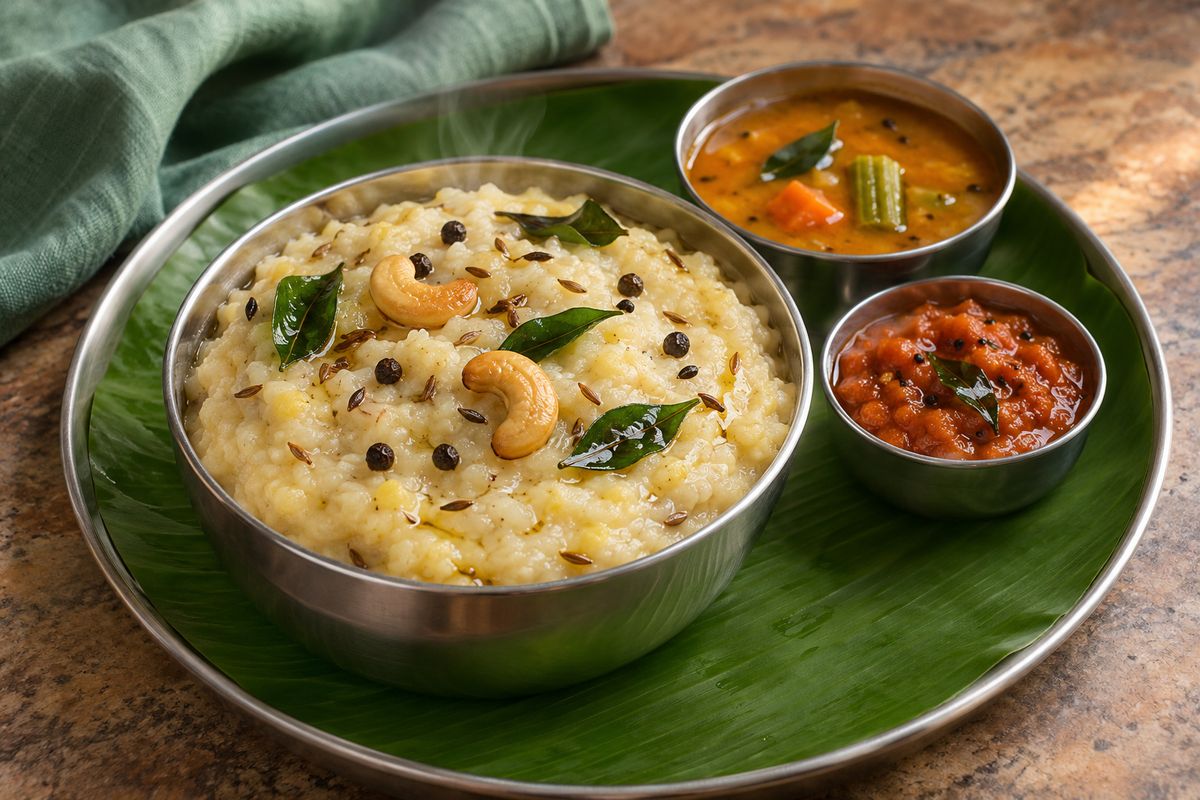
Sambar and tomato chutney on the side
Instead of: Coconut chutney and extra ghee
Sambar adds vegetables and dal; tomato chutney is lighter than coconut.
Saves about 40 kcal a plate
Recipe
How to make healthy Pongal
Prep 10 min · Cook 25 min · Serves 5 · each bowl (about 200 g)
Ingredients
- 1/2 cup raw rice (ponni or sona masoori)
- 2/3 cup split yellow moong dal
- 4½ cups water
- Salt to taste
- For the tempering
- 2 teaspoons ghee
- 1 teaspoon black pepper, coarsely crushed
- 1 teaspoon cumin seeds
- 1 tablespoon ginger, finely chopped
- A sprig of curry leaves
- A pinch of hing
- 6 cashews, halved
Method
- Dry-roast the moong dal in the cooker for 3–4 minutes on low heat, until it smells nutty.
- Add the rinsed rice, 4½ cups of water and salt. Pressure-cook for 4–5 whistles, until very soft.
- Mash lightly with a ladle into a soft, creamy mix. Add a little hot water if it is too thick.
- Heat the ghee in a small pan. Fry the cashews until golden, then add the pepper, cumin, ginger, curry leaves and hing.
- Pour the tempering over the pongal and stir well.
- Serve hot with sambar and tomato chutney.
Quick answers
Pongal, weight, protein and sugar
Can I eat Pongal for weight loss?
About 190 kcal a bowl. With a katori of sambar it makes a filling breakfast of about 290 kcal.
How much protein is in it?
About 8 g a bowl, mostly from the moong dal. A katori of sambar adds about 5 g more.
What about sugar?
No added sugar. With more dal than rice, this pongal raises blood sugar more slowly than the usual version. If you have diabetes, ask your doctor about portions.
Tips
Before you cook
- Roast the moong dal first; it gives pongal its nutty taste.
- Pongal thickens as it cools; loosen it with hot water, not more ghee.
- Crush the pepper fresh. It is the main flavour, so you need less ghee.
Common questions
Healthy Pongal: common questions
How many calories are in a bowl of pongal?
A 200 g bowl of classic ven pongal has about 240 kcal. This version with more dal and 2 teaspoons of ghee for the pot has about 190 kcal.
Is pongal good for weight loss?
Yes, made this way. More moong dal, less ghee and a bowl with sambar make a filling breakfast under 300 kcal.
The classic numbers come from Swastya AI's dish database for a typical home serving. The lighter numbers are estimates for this recipe, worked out from the oil, ghee, sugar and portion it changes. Your own kitchen will differ a little.