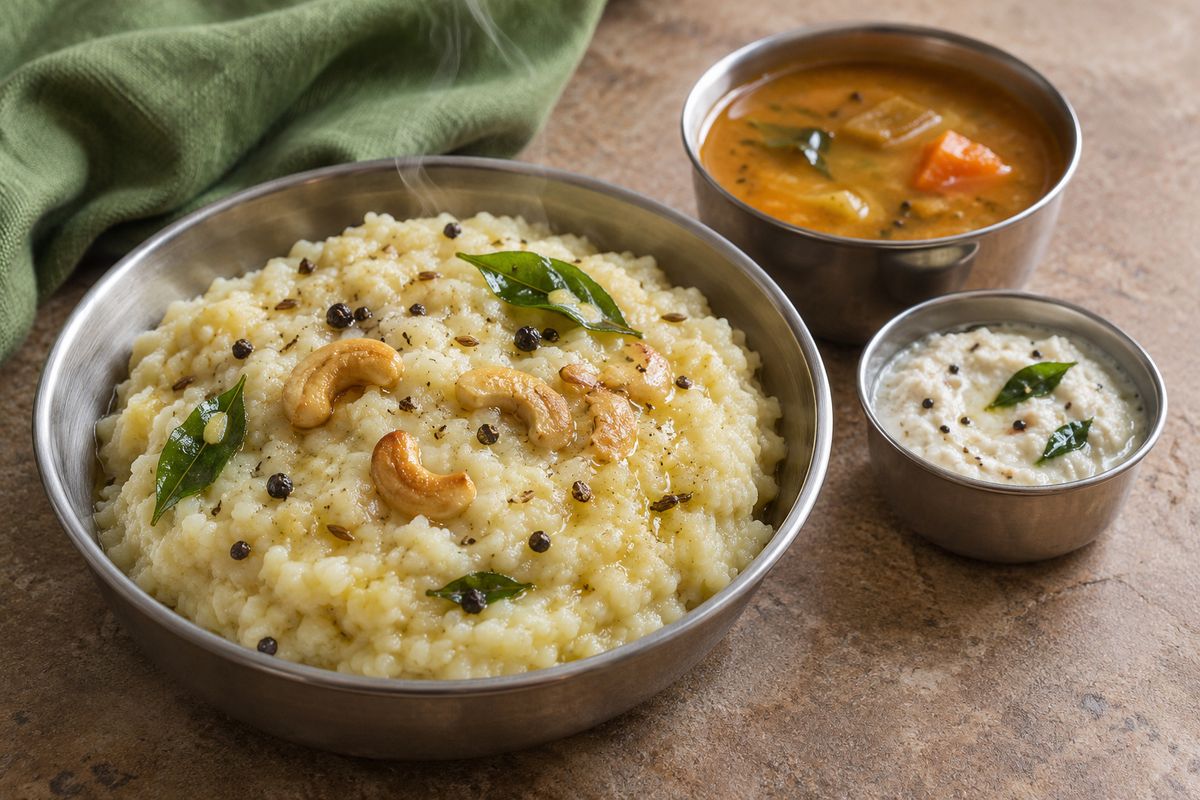
What changes
How this Pongal (Ven Pongal) gets lighter
1 tablespoon of ghee
Instead of: 2 tablespoons, plus more on top
Pepper, cumin and curry leaves bloom in a tablespoon of ghee. Pour it over at the end so every spoon smells of it.
Saves about 20 kcal a bowl
1/2 cup moong dal to 3/4 cup rice
Instead of: 1/4 cup dal to 1 cup rice
More dal raises the protein and makes the pongal creamier, the way many Tamil homes make it.
More protein
1 tablespoon cashews
Instead of: 1/4 cup
A few cashews give the crunch; a quarter cup fried in ghee adds a lot of fat.
Saves about 30 kcal a bowl
Sambar and a little chutney
Instead of: Extra ghee and coconut chutney
Sambar adds dal protein and vegetables. Coconut chutney and the ghee drizzle add fat.
Saves about 60 kcal a meal
Recipe
How to make healthy Pongal (Ven Pongal)
Prep 10 min · Cook 30 min · Serves 5 · each bowl (about 200 g)
Ingredients
- For the pongal
- 3/4 cup raw rice (sona masoori or ponni)
- 1/2 cup yellow moong dal
- 4½ cups water
- Salt to taste
- For the tadka
- 1 tablespoon ghee
- 1 tablespoon cashews, halved
- 1 teaspoon cumin seeds
- 1 teaspoon whole black pepper, lightly crushed
- 1-inch piece of ginger, finely chopped
- A sprig of curry leaves
- A pinch of hing
- To serve
- Sambar and a little coconut chutney
Method
- Dry-roast the moong dal in the pressure cooker on low heat for 2–3 minutes, until it smells nutty.
- Add the rice, rinse both together, and add the water and salt.
- Pressure-cook for 4–5 whistles, until very soft. Let the pressure drop and mash lightly with a ladle, adding hot water if it is too thick.
- Heat the ghee in a small pan. Fry the cashews until golden and lift them out.
- In the same ghee, add the cumin, pepper, ginger, curry leaves and hing and let them sizzle for 30 seconds.
- Pour the tadka over the pongal, add the cashews and mix well.
- Serve hot with sambar and a little chutney.
Quick answers
Pongal (Ven Pongal), weight, protein and sugar
Can I eat Pongal (Ven Pongal) for weight loss?
A classic bowl is about 260 kcal; this one is about 190. Pongal with sambar is a filling breakfast on a weight-loss day; go easy on the ghee drizzle and the second helping.
How much protein is in it?
About 6.6 g a bowl, from the moong dal and rice. A katori of sambar adds about 5 g.
What about sugar?
No added sugar. Rice raises blood sugar quickly; the extra moong dal and the sambar slow it. If you have diabetes, ask your doctor about the portion.
Tips
Before you cook
- Roast the moong dal lightly first; it gives pongal its nutty flavour.
- Crush the pepper just before the tadka for the best aroma.
- Pongal thickens as it cools. Loosen it with hot water, not more ghee.
Common questions
Healthy Pongal (Ven Pongal): common questions
How many calories are in 1 bowl of ven pongal?
A 200 g bowl of ven pongal has about 260 kcal. With more dal, one tablespoon of ghee and fewer cashews, it is about 190 kcal.
Can I eat pongal in weight loss?
Yes. A bowl with sambar is a filling breakfast at about 290 kcal. Keep the ghee to a tablespoon for the pot and skip the extra drizzle on top.
The classic numbers come from Swastya AI's dish database for a typical home serving. The lighter numbers are estimates for this recipe, worked out from the oil, ghee, sugar and portion it changes. Your own kitchen will differ a little.