What changes
How this Punugulu gets lighter
Appe pan with 2–3 drops of oil each
Instead of: Deep-frying
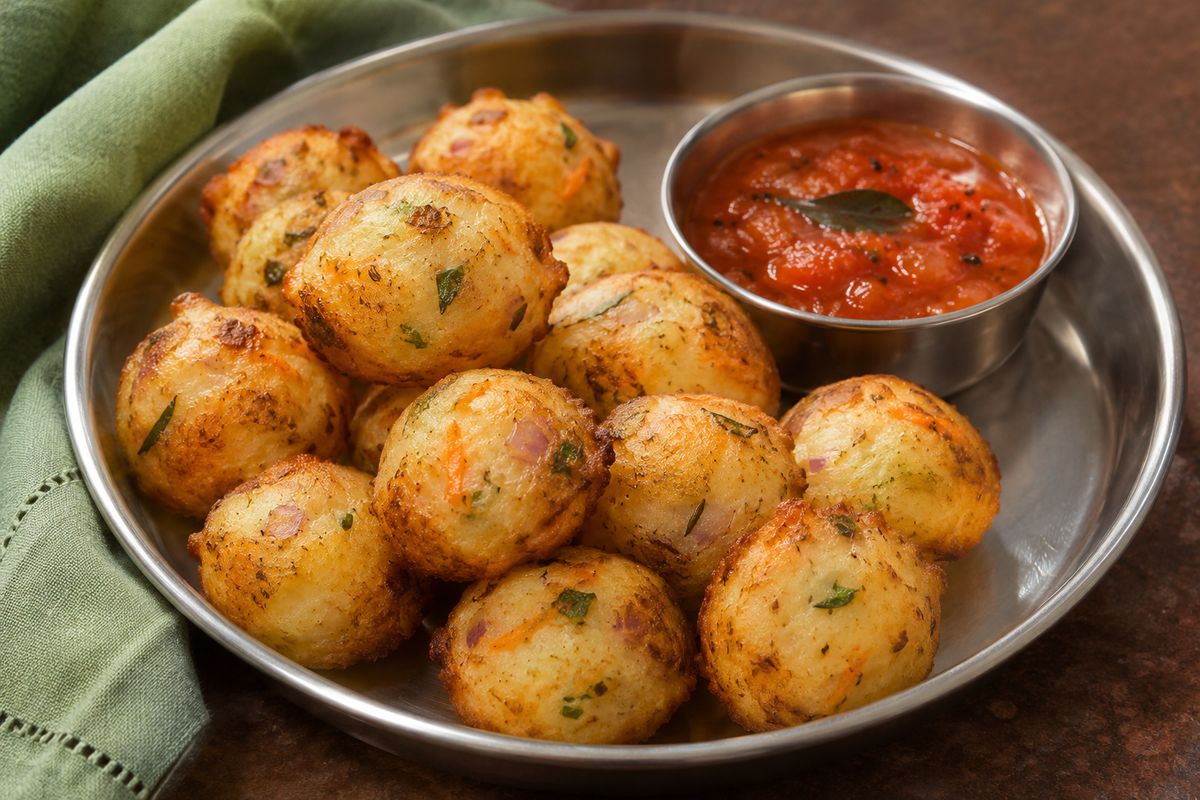
The pan gives a crisp, golden shell all round. They come out rounder and a little denser than fried punugulu.
Saves about 5 kcal a piece
Onion and carrot folded into the batter
Instead of: Plain batter
Vegetables add crunch and fibre and make each piece a little lighter.
No calories, more fibre
Six pieces with ginger or tomato chutney
Instead of: A plateful with coconut chutney
Punugulu are small and easy to eat by the dozen. Twelve with coconut chutney come to about 480 kcal.
Saves about 280 kcal
Recipe
How to make healthy Punugulu
Prep 15 min, plus 4 hr soaking · Cook 25 min · Makes 30 · each piece (1 punugulu, about 15 g)
Ingredients
- 3/4 cup urad dal, soaked for 4 hours
- 1/4 cup rice flour
- 1 medium onion, finely chopped
- 1 small carrot, grated
- 2 green chillies, finely chopped
- 1 teaspoon grated ginger
- 2 tablespoons chopped coriander
- 1 teaspoon cumin seeds
- A pinch of baking soda (optional)
- Salt to taste
- 1 tablespoon oil, for the appe pan
Method
- Drain the urad dal and grind it with very little water to a thick, fluffy batter.
- Stir in the rice flour, onion, carrot, green chillies, ginger, coriander, cumin and salt. Rest for 15 minutes; add the soda just before cooking if you want them lighter.
- Heat the appe pan on medium and put 2–3 drops of oil in each cavity.
- Drop a heaped tablespoon of batter into each cavity.
- Cook for 3 minutes until golden underneath, turn with a skewer, and cook 2–3 minutes more until crisp all round.
- Serve hot with ginger chutney, tomato chutney or a little coconut chutney.
Quick answers
Punugulu, weight, protein and sugar
Can I eat Punugulu for weight loss?
One piece is small, about 30 kcal, so the count decides it. Six with chutney make a 180 kcal snack; a plate of twelve is closer to 400.
How much protein is in it?
About 1.4 g a piece from the urad dal, so six give about 8 g. A glass of buttermilk adds about 3 g.
What about sugar?
No added sugar. Urad dal has protein and fibre, but rice flour and the count still raise blood sugar; if you have diabetes, keep to six and ask your doctor.
Tips
Before you cook
- Grind the dal with as little water as possible; a thick batter holds its shape and needs less oil.
- Leftover idli or dosa batter works too: add onion, chillies and a spoon of rice flour.
- Ginger and tomato chutneys are lighter dips than coconut chutney.
Common questions
Healthy Punugulu: common questions
How many calories are in punugulu?
One 15 g piece has about 33 kcal, so a plate of 10 is about 330 kcal. Made in an appe pan like this, a piece is about 30 kcal.
Can I make punugulu in an appe pan?
Yes. Use a thick batter, a few drops of oil in each cavity, and turn them once. They come out round and crisp, a little denser than deep-fried.
Fried tiffin a habit? A lipid profile shows where your cholesterol stands. Read about the test
All healthy recipesThe classic numbers come from Swastya AI's dish database for a typical home serving. The lighter numbers are estimates for this recipe, worked out from the oil, ghee, sugar and portion it changes. Your own kitchen will differ a little.