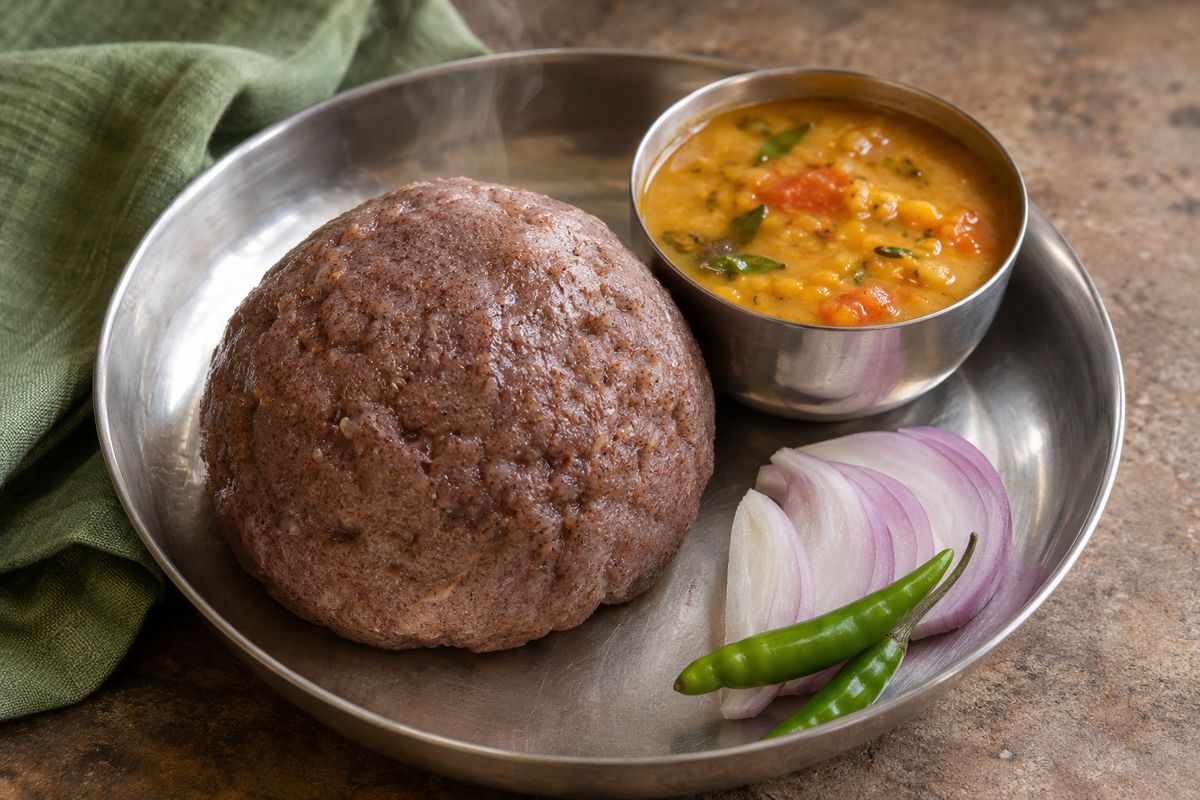
What changes
How this Ragi Sangati gets lighter
One ball
Instead of: Two balls
One ragi ball with a big katori of pappu fills you up; the second ball adds about 240 kcal.
Saves about 240 kcal a meal
A katori of pappu, leafy dal or chicken pulusu with it
Instead of: Only chutney or pickle
Ragi brings fibre and calcium but not much protein. Dal or chicken makes it a balanced meal and slows the rise in blood sugar.
More protein
Wet hands to shape the balls
Instead of: Ghee on the ball
Ragi needs no fat to taste good; a teaspoon of ghee adds about 45 kcal.
Saves about 45 kcal a teaspoon
Pulusu or curry made with 2 teaspoons of oil
Instead of: A curry with oil floating on top
The side dish usually carries the fat, so cut the oil there.
Saves about 60 kcal a katori
Recipe
How to make healthy Ragi Sangati
Prep 5 min · Cook 15 min · Serves 2 · each bowl (1 ball, about 200 g)
Ingredients
- For the sangati (2 balls)
- 1¼ cups ragi flour (about 150 g)
- 2 cups water
- 1/2 teaspoon salt
- To serve
- 2 katoris of tomato pappu, leafy dal or chicken pulusu
- 1 onion and 2 green chillies, sliced
Method
- Bring the water and salt to a rolling boil in a heavy pan.
- Lower the heat and tip in all the ragi flour as one mound in the centre. Don't stir yet; cover and let it steam for 2–3 minutes.
- Stir hard with a wooden spoon or mudde stick, pressing out lumps, until smooth and thick, about 3–4 minutes.
- Cover and cook on the lowest heat for 2 more minutes, until it no longer tastes raw and pulls away from the sides.
- Wet your palms with water and shape it into 2 smooth balls while warm.
- Serve each ball in a steel bowl with a katori of pappu or chicken pulusu and some raw onion.
Quick answers
Ragi Sangati, weight, protein and sugar
Can I eat Ragi Sangati for weight loss?
Yes. One ball is about 240 kcal, close to a heaped katori of rice, but with far more fibre, so it keeps you full longer. Stop at one and fill up on dal and vegetables.
How much protein is in it?
About 7 g a ball. A katori of pappu adds 7–9 g; a katori of chicken pulusu adds 15–20 g.
What about sugar?
No added sugar. Ragi has more fibre than rice, but soft sangati still raises blood sugar. Eating it with dal or chicken and keeping to one ball help. If you have diabetes, ask your doctor how much fits.
Tips
Before you cook
- Don't stir the flour as soon as it goes in; letting it steam first is what stops lumps.
- Wet your hands to shape the balls; no ghee or oil is needed.
- Eat it the traditional way: pinch off small pieces and dip them in the curry.
Common questions
Healthy Ragi Sangati: common questions
How many calories are in 1 ragi ball?
A ragi sangati ball of about 200 g has about 240 kcal, 7 g protein and plenty of fibre. It has very little fat unless ghee is added.
Is ragi sangati good for weight loss?
Yes. It is filling and low in fat. Keep to one ball with a big katori of dal or a lean curry, and skip ghee on top.
The classic numbers come from Swastya AI's dish database for a typical home serving. The lighter numbers are estimates for this recipe, worked out from the oil, ghee, sugar and portion it changes. Your own kitchen will differ a little.