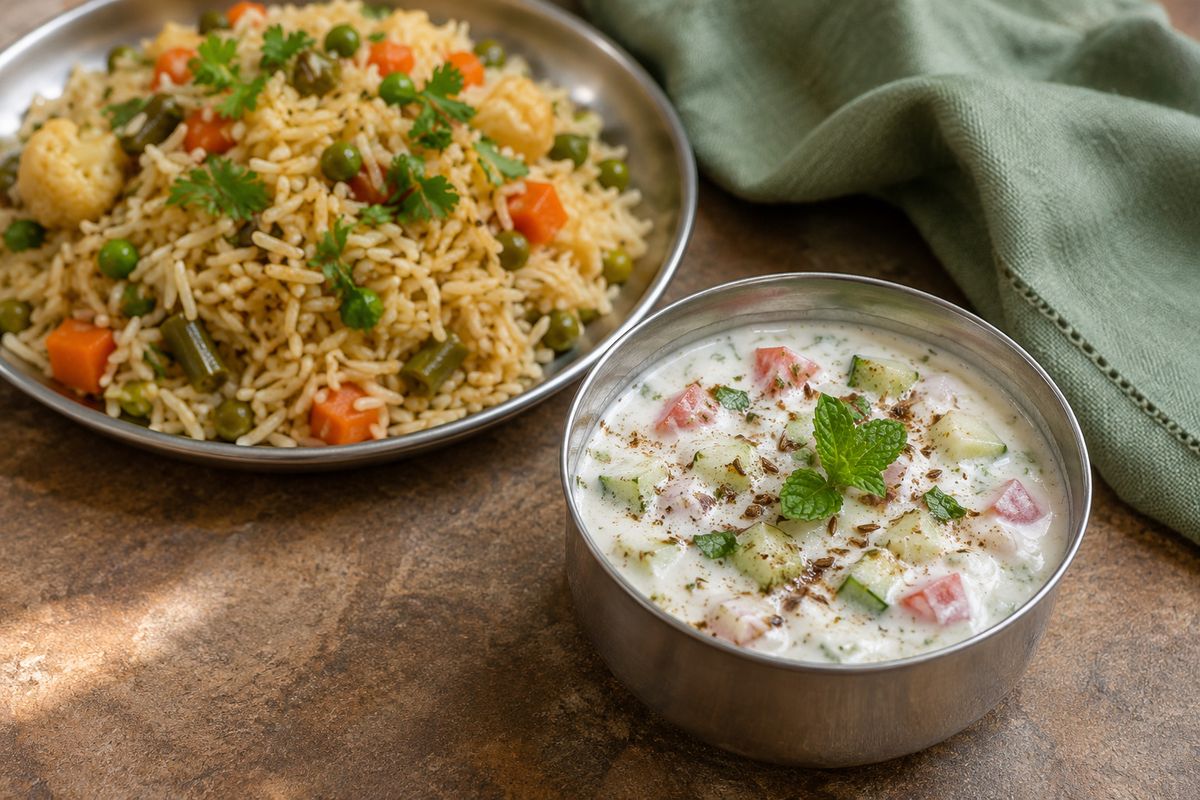
What changes
How this Raita gets lighter
Double-toned curd with a little hung curd
Instead of: Full-fat curd
The hung curd makes the raita thick and creamy, so the lighter curd doesn't taste thin.
Saves about 5 kcal a katori
A whole cucumber and a tomato
Instead of: A handful of vegetables
More vegetables make a bigger, crunchier bowl for very few calories.
No calories, more fibre
Vegetable raita
Instead of: Boondi raita
Boondi is fried besan. A katori of boondi raita has about twice the calories.
Saves about 40 kcal a katori
Roasted cumin, black salt and mint
Instead of: A spoon of sugar, as some homes add
The spices give raita its taste; it doesn't need sweetening.
Saves about 15 kcal a katori, no added sugar
Recipe
How to make healthy Raita
Prep 10 min, plus 15 min chilling · Cook No cooking · Serves 6 · each katori (about 100 g)
Ingredients
- 1 cup double-toned curd (about 250 g)
- 1/2 cup hung curd (about 100 g)
- 1 medium cucumber, grated
- 1 small tomato, finely chopped
- 1 small onion, finely chopped (optional)
- 1 green chilli, finely chopped
- 2 tablespoons mint and coriander leaves, chopped
- 1/2 teaspoon roasted cumin powder
- A pinch of black salt, and salt to taste
Method
- Whisk the curd and hung curd together until smooth and creamy.
- Squeeze a little of the water out of the grated cucumber so the raita doesn't turn runny.
- Fold in the cucumber, tomato, onion and green chilli.
- Add the roasted cumin, black salt and salt, and mix gently.
- Stir in most of the mint and coriander, keeping a little for the top.
- Chill for 15 minutes, then serve with a pinch of cumin and the rest of the herbs on top.
Quick answers
Raita, weight, protein and sugar
Can I eat Raita for weight loss?
About 40 kcal a katori, so have it freely. A katori of raita with biryani or paratha helps you eat a little less of the main dish.
How much protein is in it?
About 3 g a katori. For more, add more hung curd; each extra 1/2 cup adds about 1.5 g a katori.
What about sugar?
No added sugar, and curd raises blood sugar very little. Eating raita first with a rice meal may soften the rise. If you have diabetes, ask your doctor how to build your plate.
Tips
Before you cook
- Add salt just before serving; salted cucumber keeps releasing water.
- Use curd set the same day; sour curd makes the raita sharp.
- For a change, swap cucumber for blanched grated lauki, carrot or beetroot.
Common questions
Healthy Raita: common questions
How many calories are in 1 katori of raita?
A 100 g katori of cucumber raita has about 45 kcal with regular curd and about 40 kcal with double-toned curd. Boondi raita has about twice that.
Is raita good for weight loss?
Yes. It is low in calories, has some protein and cools a spicy meal. Choose vegetable raita over boondi raita and skip added sugar.
The classic numbers come from Swastya AI's dish database for a typical home serving. The lighter numbers are estimates for this recipe, worked out from the oil, ghee, sugar and portion it changes. Your own kitchen will differ a little.