What changes
How this Rice Kanji gets lighter
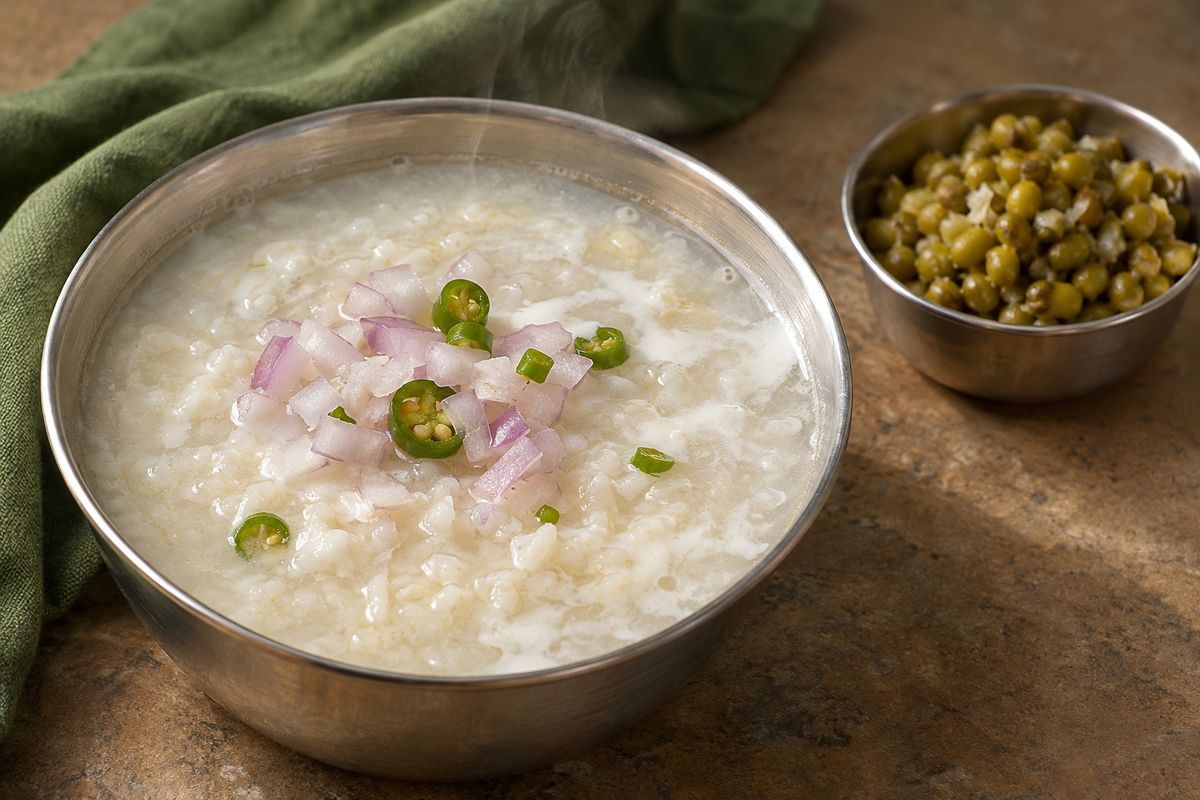
A katori of boiled moong or chana on the side
Instead of: Kanji on its own
Kanji is mostly rice and water, with under 2 g protein a katori. A side of boiled moong adds about 7 g.
More protein
A splash of buttermilk
Instead of: A spoon of ghee on top
Buttermilk gives the sour tang Andhra ganji is known for, plus a little protein. A teaspoon of ghee adds about 45 kcal.
Saves about 40 kcal a katori
Roasted papad
Instead of: A fried papad
Roasting over the flame gives the same crunch without the oil.
Saves about 30 kcal a papad
Unpolished or red rice
Instead of: Polished white rice
It keeps the bran, so you get more fibre and a slower rise in blood sugar. Cook it 10 minutes longer.
No calories, more fibre
Recipe
How to make healthy Rice Kanji
Prep 5 min · Cook 35 min · Serves 5 · each katori (about 150 g)
Ingredients
- For the kanji
- 1/2 cup rice, unpolished or parboiled if you have it
- 4 cups water
- 1/2 teaspoon salt
- To serve
- 1 cup buttermilk
- 1 small onion, finely chopped
- 1–2 green chillies, chopped
- A few coriander leaves
- Boiled moong or chana, a katori for each person
Method
- Rinse the rice under running water two or three times.
- Put the rice and 4 cups of water in a heavy pot and bring to a boil.
- Lower the heat, cover partly and simmer for 30–35 minutes, stirring now and then, until the grains are very soft and the water is thick and starchy.
- Mash a few grains against the side of the pot. The kanji should be thin and pourable; add hot water if it gets too thick.
- Stir in the salt and take it off the heat.
- Let it cool a little. Serve in a katori with a splash of buttermilk, onion, green chilli and coriander, and boiled moong on the side.
Quick answers
Rice Kanji, weight, protein and sugar
Can I eat Rice Kanji for weight loss?
Yes. A katori is about 68 kcal, warm and light. On its own it may not keep you full for long, so add a protein side.
How much protein is in it?
Only about 1.5 g a katori. A katori of boiled moong adds about 7 g, and a boiled egg about 6 g.
What about sugar?
No added sugar, but soft-cooked rice raises blood sugar quickly. Buttermilk and a moong side slow it a little. If you have diabetes, ask your doctor whether kanji suits you, and how much.
Tips
Before you cook
- The thicker you cook it, the more rice goes into each katori. For a light meal, keep it thin and pourable.
- Leftover kanji thickens as it cools. Loosen it with hot water or buttermilk, not more rice.
- Kanji makes a good sick-day meal: warm, salty and gentle on the stomach.
Common questions
Healthy Rice Kanji: common questions
How many calories are in 1 bowl of rice kanji?
About 68 kcal in a thin 150 g katori. A thick kanji made with more rice can be double that.
Is rice kanji good for weight loss?
It is light, about 68 kcal a katori, but low in protein. Have it with boiled moong or an egg so you stay full, and keep it to one or two katoris.
The classic numbers come from Swastya AI's dish database for a typical home serving. The lighter numbers are estimates for this recipe, worked out from the oil, ghee, sugar and portion it changes. Your own kitchen will differ a little.