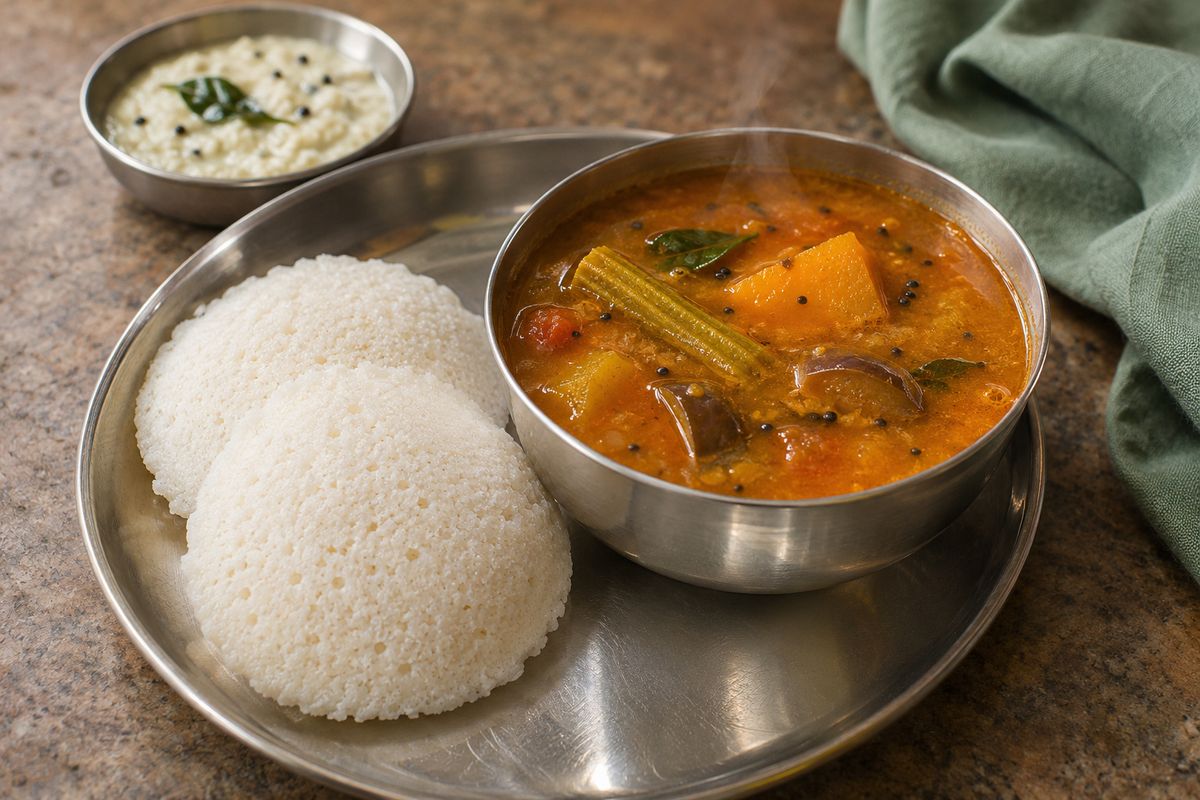
What changes
How this Sambar gets lighter
2 teaspoons oil for the tadka
Instead of: 2 tablespoons
Mustard seeds, curry leaves and red chillies bloom in a spoon of oil; the rest just floats on top.
Saves about 10 kcal a katori
2 cups mixed vegetables
Instead of: 1 cup
Drumstick, pumpkin, brinjal and bhindi add fibre and bulk, so a katori fills you more for a few extra calories.
More fibre and volume
Two katoris of sambar, less rice
Instead of: One katori over a heap of rice
Sambar is the protein and vegetables of the meal. Swapping some rice for more sambar keeps calories level and adds protein.
More protein
Salt added at the end, after tasting
Instead of: Salt in the dal and again in the sambar
Sambar powder and tamarind already add a lot of flavour; tasting first usually means less salt.
No calories, less salt
Recipe
How to make healthy Sambar
Prep 15 min · Cook 35 min · Serves 10 · each katori (about 150 g)
Ingredients
- For the sambar
- 1 cup toor dal
- 3 cups water, for the dal
- 1/4 teaspoon turmeric
- 2 cups mixed vegetables (drumstick, pumpkin, brinjal, bhindi, carrot), cut into pieces
- 1 medium onion, chopped (or 8 shallots)
- 1 medium tomato, chopped
- 1–2 green chillies, slit
- 1 teaspoon ginger paste
- Tamarind the size of a small lemon, soaked in 1 cup warm water
- 1½ tablespoons sambar powder
- Salt to taste
- For the tadka
- 2 teaspoons sesame or coconut oil
- 1 teaspoon mustard seeds
- 1/2 teaspoon cumin seeds
- 2 dry red chillies
- A pinch of hing
- A sprig of curry leaves
- Coriander leaves, to finish
Method
- Pressure-cook the dal with 3 cups of water and the turmeric for 3–4 whistles until soft. Mash well.
- In a large pot, boil the vegetables, onion, tomato, chillies and ginger in 2 cups of water until just tender, about 10 minutes. Add hard vegetables first and bhindi last.
- Squeeze the tamarind and add its water with the sambar powder. Simmer for 5 minutes.
- Add the mashed dal and 1–2 cups of water for a pouring consistency. Simmer for 10 minutes.
- For the tadka, heat 2 teaspoons of oil. Add the mustard seeds, cumin, red chillies, hing and curry leaves, and pour it over the sambar.
- Finish with coriander. Taste, then add salt.
- Serve with idli, dosa or a small mound of rice.
Quick answers
Sambar, weight, protein and sugar
Can I eat Sambar for weight loss?
A katori is about 100 kcal, so sambar is one of the lightest things on a South Indian plate. Two katoris with a small mound of rice or two idlis fill you up without many calories.
How much protein is in it?
About 5.5 g a katori from the toor dal. A second katori adds the same again; a katori of curd on the side adds about 6 g.
What about sugar?
No added sugar, and dal and vegetables raise blood sugar slowly. What you eat it with matters more: more sambar and less rice helps. If you have diabetes, ask your doctor about portions.
Tips
Before you cook
- Boil the vegetables in the tamarind water instead of frying them; the flavour soaks in without oil.
- Use the dal's cooking water; it carries flavour and protein.
- Pour the tadka on at the very end, so you taste every drop of it.
Common questions
Healthy Sambar: common questions
How many calories are in one katori of sambar?
A 150 g katori of sambar has about 105 kcal and 5 g protein. This version with a lighter tadka and more vegetables is about 100 kcal.
Can I eat sambar every day in weight loss?
Yes. Sambar is low in calories and gives protein and fibre. Keep the rice or idli portion in check and use a small tadka.
Rely on dal for your iron? A haemoglobin test is a simple check for anaemia. Read about the test
All healthy recipesThe classic numbers come from Swastya AI's dish database for a typical home serving. The lighter numbers are estimates for this recipe, worked out from the oil, ghee, sugar and portion it changes. Your own kitchen will differ a little.