What changes
How this Set Dosa gets lighter
Wipe the tawa with an oiled onion half
Instead of: Oil drizzled on each dosa
Set dosa cooks on one side under a lid and only needs a film of oil to lift off.
Saves about 5 kcal a dosa
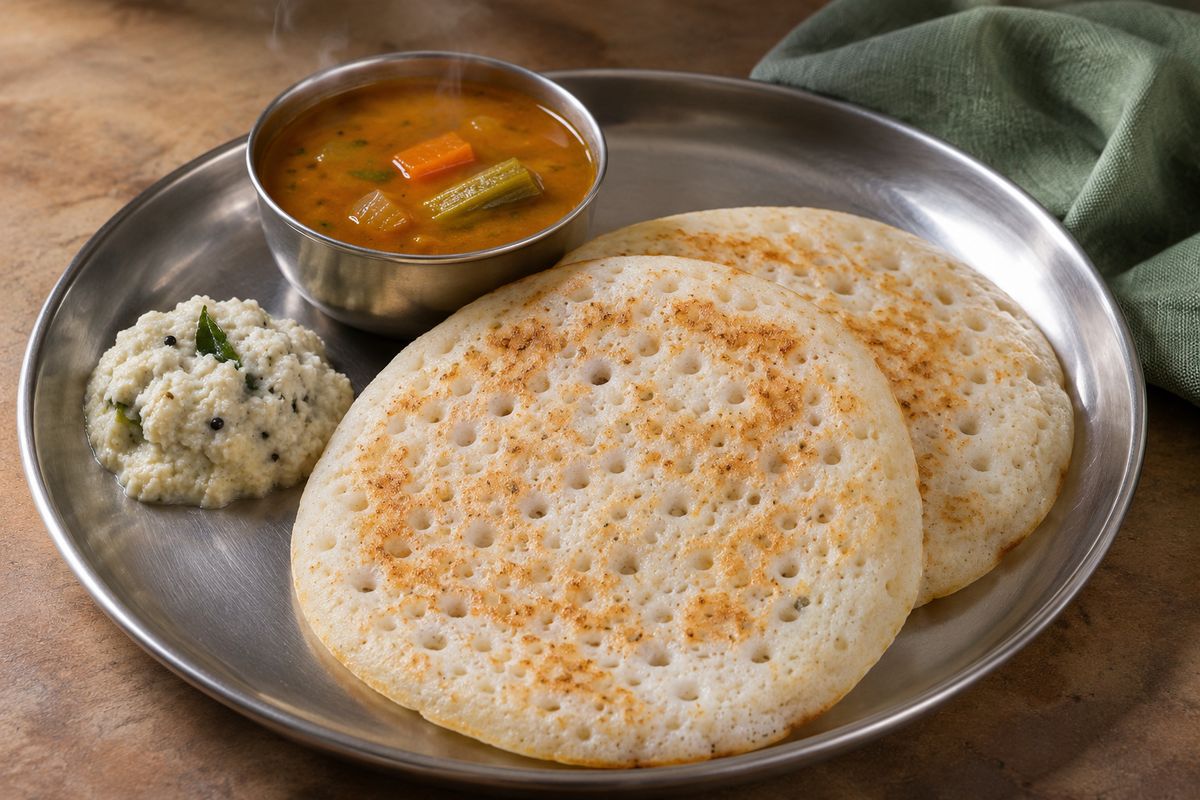
Two dosas with a katori of sambar
Instead of: A set of three with chutney only
Sambar adds dal protein and vegetables, so two dosas fill you up.
Saves about 65 kcal a plate
Roasted chana and coconut chutney
Instead of: All-coconut chutney
Half the coconut, with roasted chana for body. Still creamy, with a little protein.
Saves about 30 kcal a serving
Recipe
How to make healthy Set Dosa
Prep 15 min, plus 6–8 hr soaking and 8–12 hr fermenting · Cook 30 min · Makes 15 · each piece (1 set dosa, about 50 g)
Ingredients
- For the batter (makes about 15)
- 1 cup idli rice
- 1/3 cup urad dal
- 1/4 cup cooked rice (or thick poha, rinsed)
- 1/2 teaspoon methi (fenugreek) seeds
- 1 teaspoon salt
- Water for soaking and grinding
- For the tawa
- 1/2 small onion and 1 teaspoon oil, for wiping
- For the chutney
- 1/4 cup grated coconut
- 2 tablespoons roasted chana dal
- 1 green chilli
- Salt to taste
- To serve
- Sambar or vegetable sagu
Method
- Soak the rice, urad dal, cooked rice and methi seeds together for 6–8 hours.
- Grind to a smooth, thick batter with just enough water. Ferment in a warm place for 8–12 hours until risen and bubbly.
- Stir in the salt gently, without knocking out the air. The batter should be thick but pourable.
- Heat a tawa on medium. Dip the onion half in the oil and rub it over the tawa.
- Pour a ladle of batter and spread it lightly into a thick 5-inch circle. Do not spread it thin.
- Cover and cook for 2 minutes, until the top is set and full of holes and the base is light golden. Do not flip.
- Wipe the tawa with the onion again before each dosa.
- Grind the chutney ingredients with a little water.
- Serve two dosas with a katori of sambar and a spoon of chutney.
Quick answers
Set Dosa, weight, protein and sugar
Can I eat Set Dosa for weight loss?
One set dosa is about 60 kcal. Two with a katori of sambar is about 230 kcal, a light, filling breakfast. Go easy on coconut chutney; it adds up faster than the dosas.
How much protein is in it?
About 1.8 g a dosa, so the dosas alone are low in protein. A katori of sambar adds about 5 g; a glass of buttermilk adds about 3 g.
What about sugar?
No added sugar. Fermented rice batter still raises blood sugar fairly quickly, so eat it with sambar and stop at two or three. If you have diabetes, ask your doctor what portion suits you.
Tips
Before you cook
- A thick, well-fermented batter gives the spongy holes; do not thin it down.
- Cook covered on medium heat; the steam cooks the top without flipping or extra oil.
- Leftover batter keeps in the fridge for 3–4 days.
Common questions
Healthy Set Dosa: common questions
How many calories are in one set dosa?
One 50 g set dosa has about 60–65 kcal. A set of three with coconut chutney is about 250 kcal; two with a katori of sambar is about 230.
Is set dosa healthier than plain dosa?
Set dosa uses very little oil because it cooks on one side under a lid, so it is often lighter than a crisp, oiled plain dosa. Both are mostly rice, so portion and sambar matter most.
The classic numbers come from Swastya AI's dish database for a typical home serving. The lighter numbers are estimates for this recipe, worked out from the oil, ghee, sugar and portion it changes. Your own kitchen will differ a little.