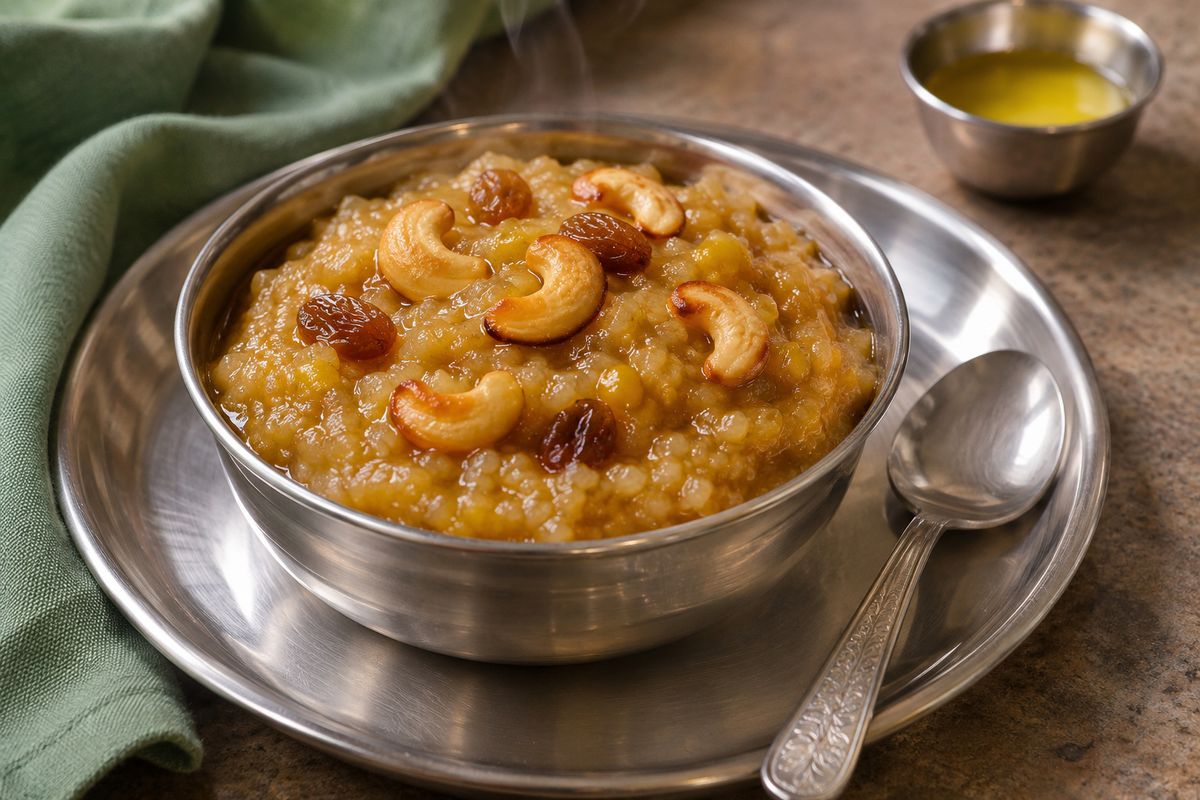
What changes
How this Sweet Pongal gets lighter
Equal rice and moong dal
Instead of: Twice as much rice as dal
More dal means more protein and a slower rise in blood sugar, with the same soft, creamy texture.
More protein, about the same calories
A third less jaggery
Instead of: 1 cup jaggery
Jaggery has about the same calories as sugar, with a little iron and flavour. Cardamom and a pinch of nutmeg make less taste sweeter.
Saves about 25 kcal a bowl
2 teaspoons ghee
Instead of: 2 tablespoons
Added at the end with the cashews, a little ghee still gives the aroma.
Saves about 25 kcal a bowl
A 150 g bowl
Instead of: A 200 g bowl
Pongal is rich and filling; a smaller bowl after a meal is plenty.
Saves about 70 kcal
Recipe
How to make healthy Sweet Pongal
Prep 10 min · Cook 30 min · Serves 6 · each bowl (about 150 g)
Ingredients
- For the pongal (6 bowls)
- 1/2 cup raw rice (sona masoori or raw pongal rice)
- 1/2 cup split yellow moong dal
- 3 cups water
- 1 cup toned milk
- 1/2 cup grated jaggery (about 90 g, a third less than usual)
- 1/4 cup water, for the jaggery
- 1/2 teaspoon cardamom powder
- A pinch of nutmeg
- 2 tablespoons freshly grated coconut
- 2 teaspoons ghee
- 1 tablespoon cashews
- 1 tablespoon raisins
Method
- Dry-roast the moong dal in a pressure cooker on low heat for 3–4 minutes, until it smells nutty.
- Add the rinsed rice, 3 cups of water and the milk. Pressure-cook for 4–5 whistles, until soft, then mash lightly.
- Meanwhile, melt the jaggery in 1/4 cup of water on low heat and strain out any grit.
- Take the cooker off the heat and stir in the warm jaggery syrup. Adding it over high heat can split the milk.
- Simmer gently for 2–3 minutes, stirring, until thick and glossy. Stir in the cardamom, nutmeg and coconut.
- Heat the ghee in a small pan, toast the cashews and raisins until golden and pour them over the pongal.
- Serve warm, a 150 g bowl each, after a meal.
Quick answers
Sweet Pongal, weight, protein and sugar
Can I eat Sweet Pongal for weight loss?
A lighter 150 g bowl is about 210 kcal, against 300 for a classic 200 g bowl. Have it as the sweet on a festival day, after a meal, and skip other sweets.
How much protein is in it?
About 6 g a bowl, from the moong dal and milk. A glass of milk with it adds about 6 g more.
What about sugar?
About 11 g of sugar from jaggery a bowl, instead of about 24 g. It still raises blood sugar, so eat it after a meal and keep to one small bowl. If you have diabetes, ask your doctor first.
Tips
Before you cook
- Add the jaggery off the heat and keep it warm, not boiling, so the milk doesn't split.
- Roast the moong dal well; the nutty taste makes the pongal feel richer.
- Pongal thickens as it cools. Loosen it with hot milk or water, not more ghee.
Common questions
Healthy Sweet Pongal: common questions
How many calories are in sweet pongal?
A 200 g bowl of classic sweet pongal has about 300 kcal and 24 g added sugar. A 150 g bowl of the lighter version, with more dal and less jaggery, is about 210 kcal.
Sweet pongal with jaggery or sugar?
Jaggery is traditional and has about the same calories as sugar, with a little iron and more flavour. Using a third less of either matters more than which one you pick.
Love festival sweets? An HbA1c shows how your blood sugar has averaged over 3 months. Read about the test
All healthy recipesThe classic numbers come from Swastya AI's dish database for a typical home serving. The lighter numbers are estimates for this recipe, worked out from the oil, ghee, sugar and portion it changes. Your own kitchen will differ a little.