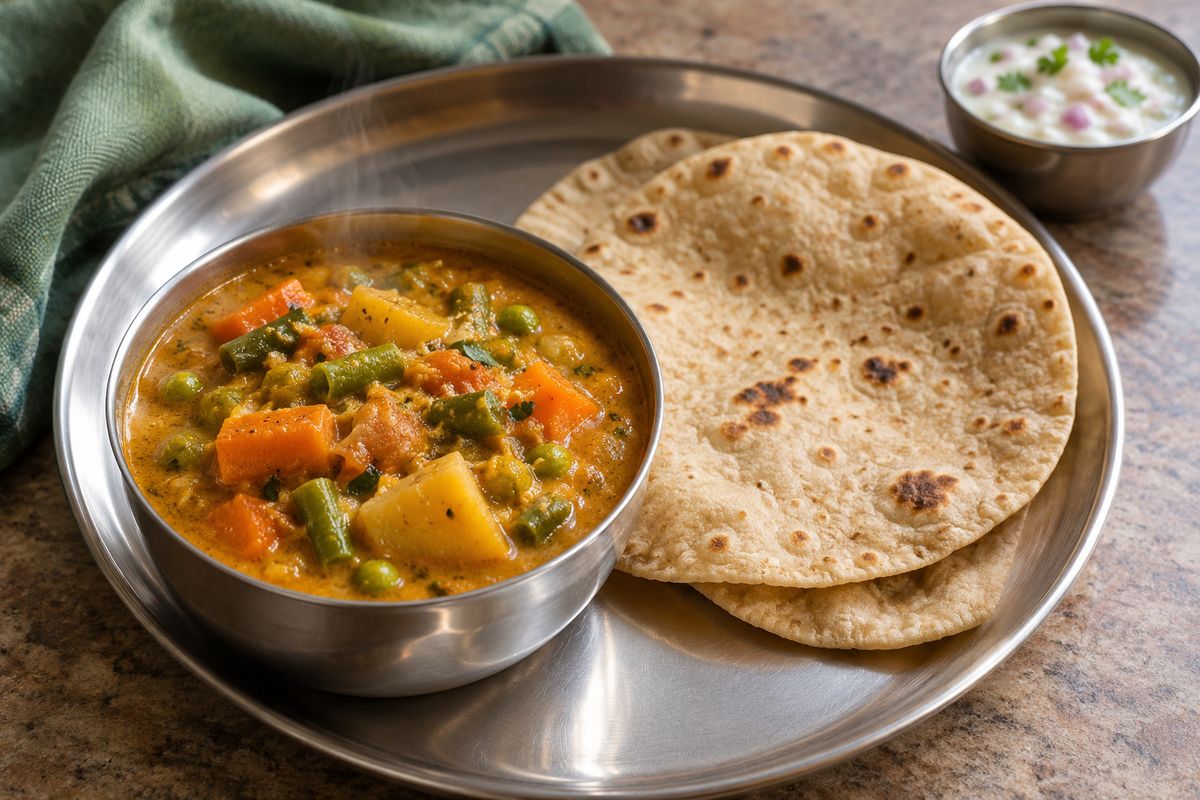
What changes
How this Vegetable Curry gets lighter
1/4 cup thick coconut milk plus 3/4 cup water
Instead of: 1 cup thick coconut milk
You still get the coconut taste and a creamy gravy. Thick coconut milk is about one-fifth fat.
Saves about 60 kcal a katori, compared with a full cup
1 teaspoon of oil
Instead of: 1 tablespoon
Coconut milk already brings fat; the tadka only needs a teaspoon to pop the seeds.
Saves about 15 kcal a katori
More peas and beans, less potato
Instead of: Mostly potato
Peas add protein and beans add fibre, for fewer calories than extra potato.
A little more protein and fibre
2 phulkas and a katori of dal
Instead of: Parathas or puris
The curry is light; the bread decides the meal. Dal adds the protein the curry lacks.
Saves about 150 kcal a meal
Recipe
How to make healthy Vegetable Curry
Prep 15 min · Cook 30 min · Serves 6 · each katori (150 g)
Ingredients
- For the curry (6 katoris)
- 2 cups chopped carrot and beans
- 1 cup green peas
- 1 small potato, diced
- 1 medium onion, finely chopped
- 2 medium tomatoes, pureed
- 1 tablespoon ginger-garlic paste
- 1 teaspoon oil
- 1/2 teaspoon mustard seeds
- 1/2 teaspoon cumin seeds
- 8–10 curry leaves
- 1/2 teaspoon turmeric
- 1 teaspoon coriander powder
- 1 teaspoon red chilli powder
- 1/2 teaspoon garam masala
- Salt to taste
- 3/4 cup water
- 1/4 cup thick coconut milk
- A handful of coriander leaves
Method
- Heat the oil in a pan. Add the mustard and cumin seeds and let them splutter, then add the curry leaves.
- Add the onion and cook until soft and translucent, with a splash of water if it sticks.
- Add the ginger-garlic paste and cook for a minute, then the tomato puree. Cook for 6–7 minutes, until thick.
- Stir in the turmeric, coriander powder, chilli powder and salt and cook for 2 minutes.
- Add the vegetables, peas and potato with the water. Cover and simmer for 12–15 minutes, until tender.
- Stir in the coconut milk and garam masala and warm gently for 2 minutes; don't let it boil hard.
- Finish with coriander and serve with 2 phulkas or a little rice and a katori of dal.
Quick answers
Vegetable Curry, weight, protein and sugar
Can I eat Vegetable Curry for weight loss?
Yes. A katori is about 90 kcal, so you can take a generous helping. Keep the coconut milk thin and have it with phulkas rather than parathas.
How much protein is in it?
About 3 g a katori, mostly from the peas. A katori of dal or curd adds 6–9 g, or a boiled egg about 6 g.
What about sugar?
No added sugar. Vegetables and peas raise blood sugar slowly; the rice or roti with it matters more. Fill half your plate with this curry and salad.
Tips
Before you cook
- Add the coconut milk at the end and only warm it through; a hard boil makes it split.
- Cut the vegetables to the same size so they cook evenly.
- Making fresh coconut milk? Use the second, thinner squeeze for the gravy.
Common questions
Healthy Vegetable Curry: common questions
How many calories are in 1 katori of vegetable curry?
About 105 kcal in a 150 g katori of classic vegetable curry. With a quarter cup of thick coconut milk and a teaspoon of oil for the pan, it is about 90 kcal.
Is coconut milk vegetable curry good for weight loss?
Yes, if the coconut milk is thinned. A quarter cup of thick coconut milk for the whole pan keeps the taste at about 90 kcal a katori.
The classic numbers come from Swastya AI's dish database for a typical home serving. The lighter numbers are estimates for this recipe, worked out from the oil, ghee, sugar and portion it changes. Your own kitchen will differ a little.