What changes
How this Vegetable Kurma gets lighter
1/4 cup coconut ground with 2 tablespoons roasted chana and 4 cashews
Instead of: 1/2 cup coconut
Roasted chana is a darshini trick for a thick, creamy kurma with less coconut fat, plus a little protein.
Saves about 20 kcal a katori
2 teaspoons oil
Instead of: 2 tablespoons
The ground masala carries the flavour; the whole spices bloom in a spoon of oil.
Saves about 30 kcal a katori
3 cups vegetables with peas and one small potato
Instead of: 2 cups with lots of potato
Beans, carrot, cauliflower and peas give more fibre and volume a katori; peas add protein.
Saves about 10 kcal a katori, more fibre
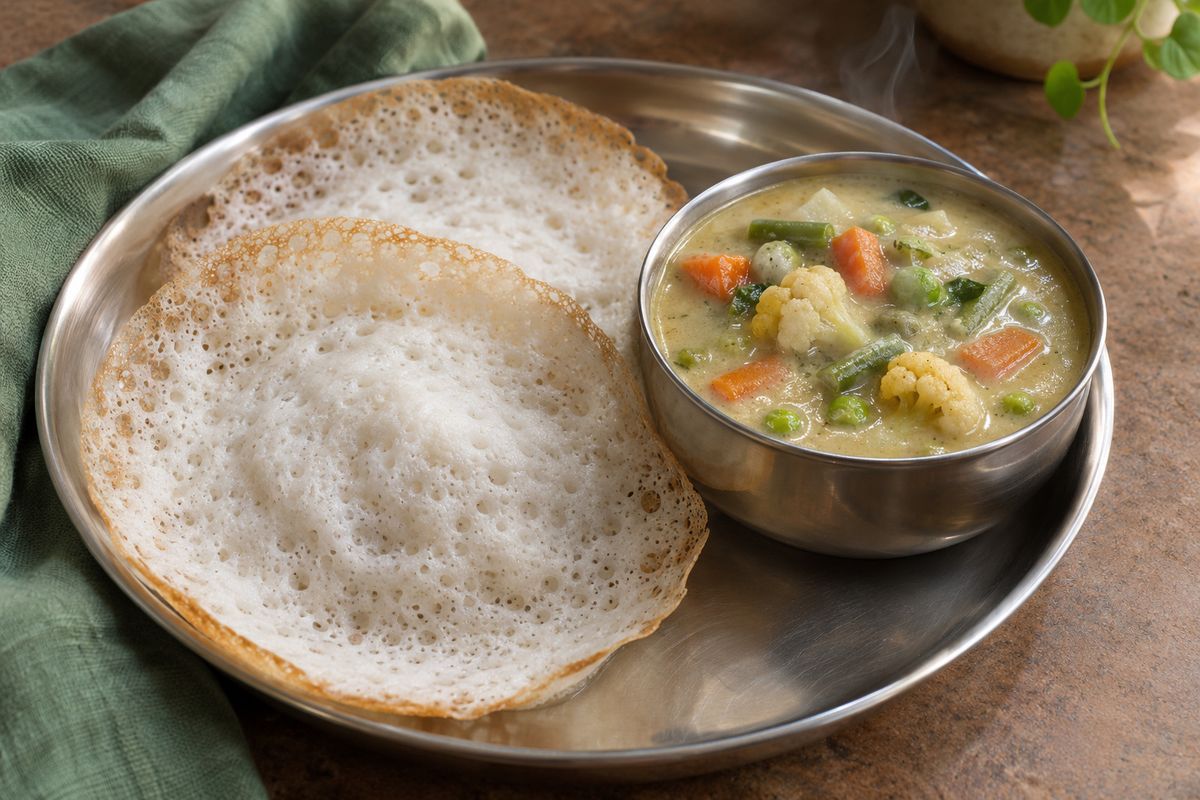
Kurma with chapati, appam or idiyappam
Instead of: Kurma with parotta or puri
Layered parotta and puri carry a lot of oil; chapati or appam keeps the plate light.
Saves about 150 kcal a meal
Recipe
How to make healthy Vegetable Kurma
Prep 15 min · Cook 30 min · Serves 6 · each katori (about 150 g)
Ingredients
- For the masala paste
- 1/4 cup grated coconut
- 2 tablespoons roasted chana (pottukadalai)
- 4 cashews
- 1 teaspoon fennel seeds
- 1-inch cinnamon, 2 cloves and 2 cardamom pods
- 2 green chillies
- 1/2 cup water
- For the kurma
- 2 teaspoons coconut or vegetable oil
- 1/2 teaspoon mustard seeds
- 1/2 teaspoon cumin seeds
- A sprig of curry leaves
- 1 medium onion, finely chopped
- 1 tablespoon ginger-garlic paste
- 2 medium tomatoes, pureed
- 1/2 teaspoon turmeric
- 1 teaspoon coriander powder
- 3 cups mixed vegetables (beans, carrot, cauliflower, 1 small potato), cut
- 1 cup green peas
- 1 cup water
- Salt to taste
- Coriander leaves, to finish
Method
- Grind the coconut, roasted chana, cashews, fennel, whole spices and green chillies with 1/2 cup of water to a smooth paste.
- Heat the oil in a heavy pan. Add the mustard and cumin seeds and the curry leaves.
- Add the onion and cook until soft and light golden, sprinkling in water if it sticks.
- Add the ginger-garlic paste, then the tomato puree, turmeric and coriander powder. Cook until thick, 5–6 minutes.
- Add the vegetables, peas, salt and 1 cup of water. Cover and simmer for 12–15 minutes until just tender.
- Stir in the ground paste and simmer gently for 5 minutes, adding water for a pouring gravy. Do not boil hard after adding the paste.
- Finish with coriander. Serve with chapati, appam or idiyappam.
Quick answers
Vegetable Kurma, weight, protein and sugar
Can I eat Vegetable Kurma for weight loss?
A katori is about 100 kcal, against 165 for the classic. Have it with one or two chapatis or an appam for a light meal, and skip the parotta.
How much protein is in it?
About 3.9 g a katori, from the peas and roasted chana. A katori of curd or dal on the side adds 6–7 g.
What about sugar?
No added sugar, and vegetables and peas raise blood sugar slowly. The bread you eat it with matters more. If you have diabetes, ask your doctor what suits you.
Tips
Before you cook
- Do not boil the kurma hard after adding the coconut paste, or it can split.
- Cut the vegetables the same size so they cook evenly.
- Roasted chana thickens as it sits; thin the kurma with hot water when reheating.
Common questions
Healthy Vegetable Kurma: common questions
How many calories are in vegetable kurma?
A 150 g katori of restaurant-style vegetable kurma has about 165 kcal. With less coconut, roasted chana and 2 teaspoons of oil, it is about 100 kcal.
Is vegetable kurma healthy?
Yes, it is mostly vegetables. The coconut and oil make it rich, so keep those small and serve it with chapati rather than parotta.
The classic numbers come from Swastya AI's dish database for a typical home serving. The lighter numbers are estimates for this recipe, worked out from the oil, ghee, sugar and portion it changes. Your own kitchen will differ a little.