The short version
- 1
Fill half your plate with sabzi and salad, a quarter with dal, paneer, egg, fish or chicken, and a quarter with roti, rice or millet.3
- 2
Indians get 62% of their energy from carbohydrates. Switching to whole wheat or millets without eating less of them wasn’t linked to lower diabetes risk.12
- 3
Whole fruit in a sensible portion is fine. Juice is the problem.1,3,13
The plate
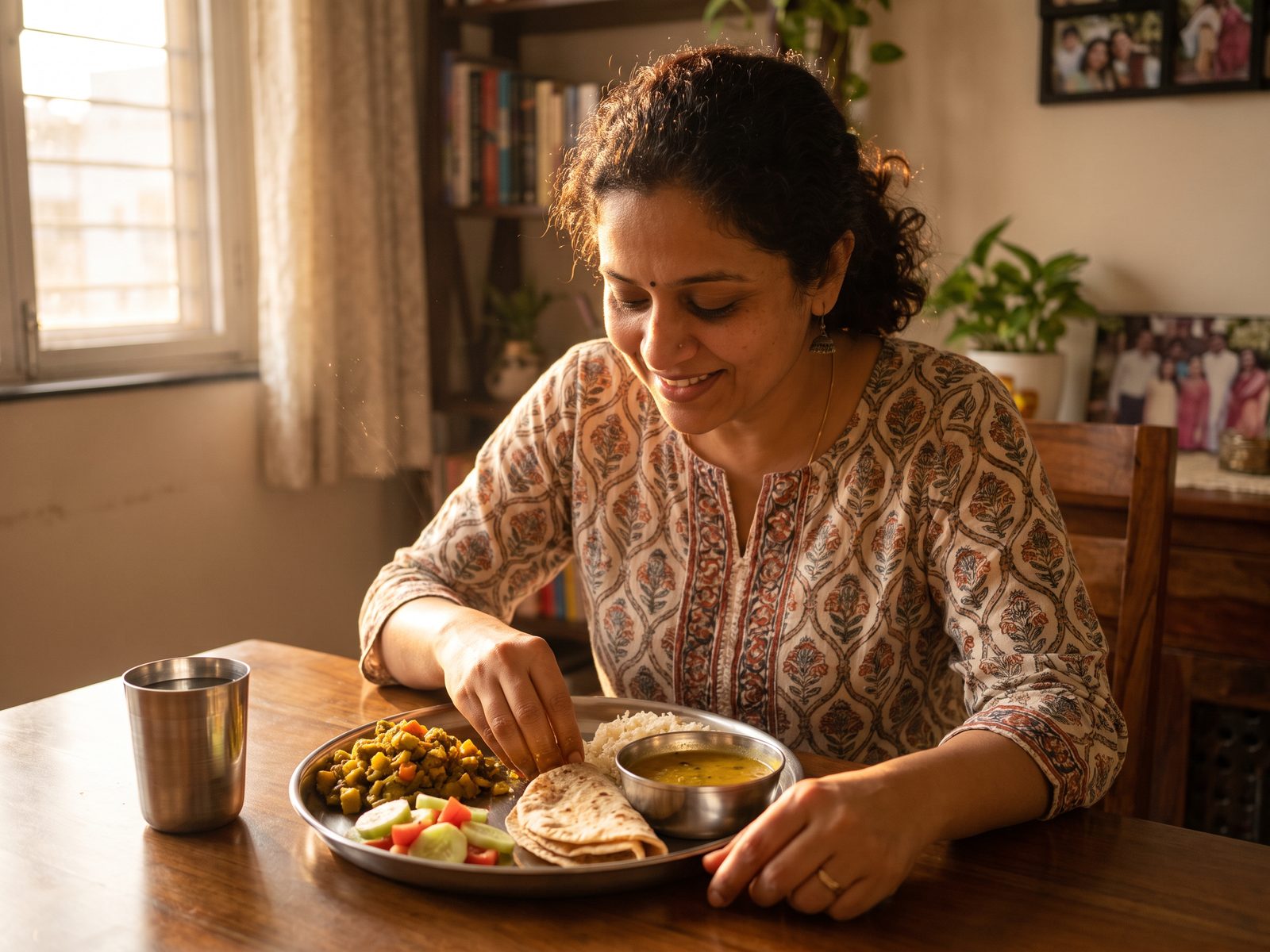
Half sabzi, a quarter protein, a quarter grain
ADA’s plate method, with Indian food on it. In one trial it lowered HbA1c about as well as counting carbohydrates.
- Sabzi and salad · 50%Palak, lauki, bhindi, beans, cabbage, cucumber.
- Protein · 25%Dal, chana, rajma, paneer, egg, fish or chicken.
- Grain · 25%Roti, rice or millet, measured rather than heaped.
India
Why the plate matters here
- 11.4%
- of Indian adults have diabetes, and 15.3% more have prediabetes.11
- 62.3%
- of the energy Indians eat comes from carbohydrates, much of it white rice and atta. Protein is only 12%.12
In the same survey, eating a little more protein (dal, dairy, eggs or fish) in place of some carbohydrate was linked to lower odds of diabetes.12
Glycaemic index
How fast Indian staples raise sugar
GI compares a food with pure glucose. 55 or less is low; 70 or more is high. Longer bars rise faster.
- Ragi mudde98
- Jowar roti84
- Instant oats79
- White rice, Indian78
- Rice poha74
- Brown rice68
- Chapati62–66
- Parboiled brown rice58
- Rolled-oat porridge55
- Broken-wheat upma52
- Sorghum poha45
- Orange43
- Dals: chana, masoor, moong, toor38–43
- Apple36
- Chickpea sundal24
Cooking matters
The dish changes the number more than the grain
- Millets
- Pooled, millets average about 53. But ragi mudde tested at 98 and jowar roti at 84, while barnyard-millet khichdi tested at 35.6,7,8
- Poha
- Rice poha is about 74; poha made from sorghum flakes, about 45.8
- Rice
- An Indian parboiled brown rice tested at 58. Even light polishing pushed it to 73, and full polishing to 80.9
Your day
Meals to start from
- Breakfast
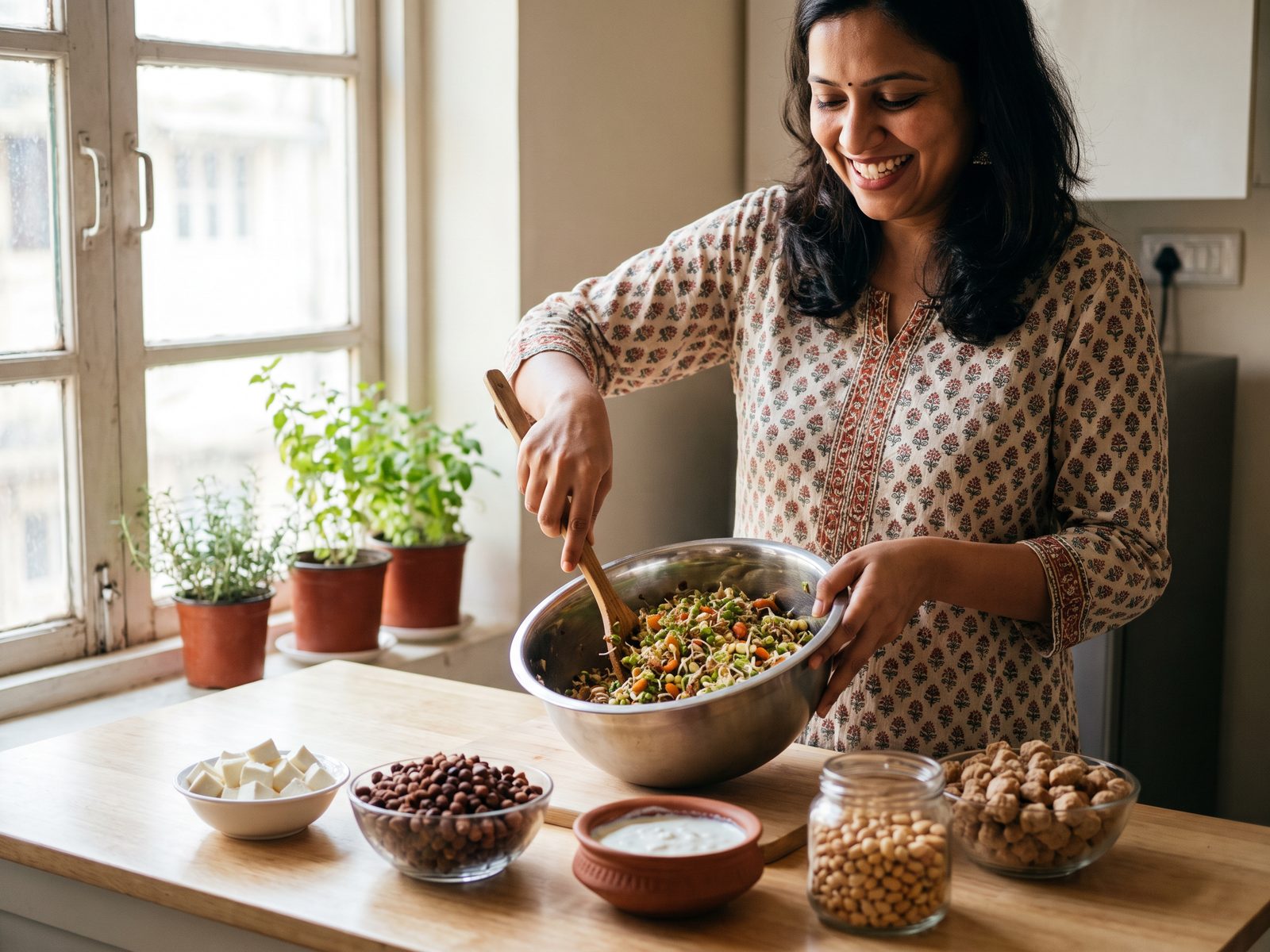
- Pesarattu or moong chilla with curd; vegetable dalia; rolled oats rather than instant; or idli with a big bowl of sambar, and fewer idlis. Add an egg, paneer or curd for protein.2,5,6
- Lunch and dinner
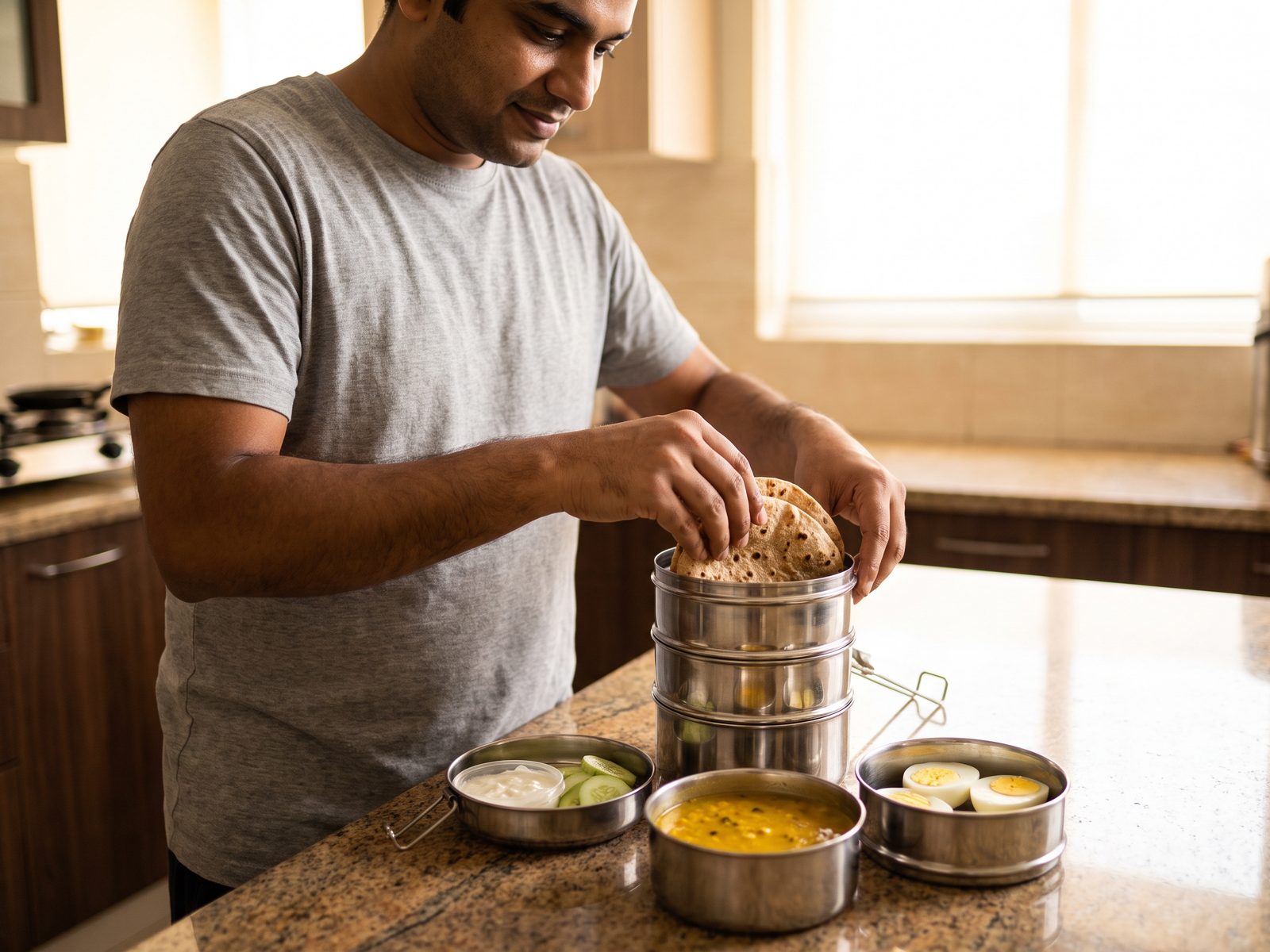
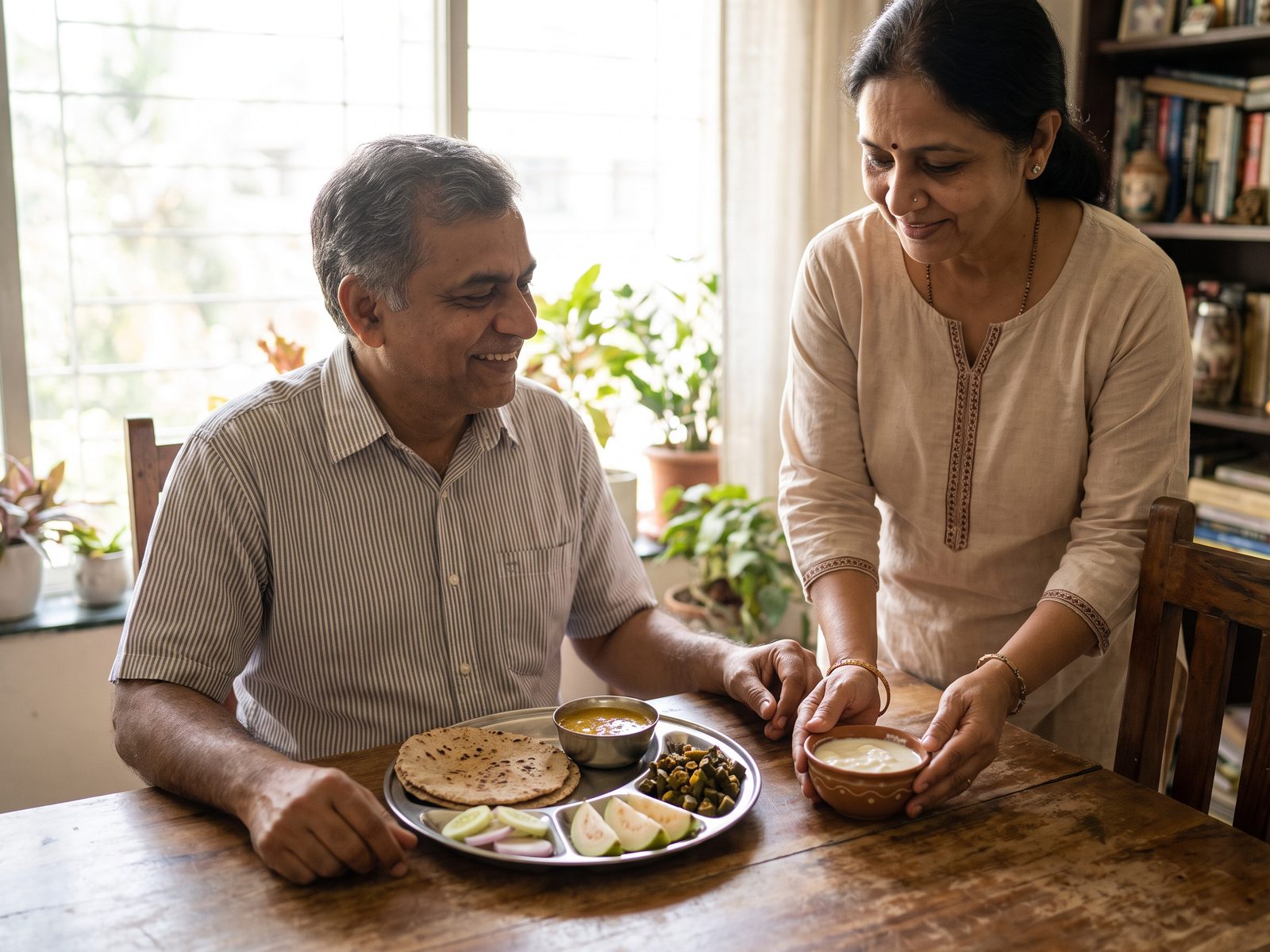
- Chapati with dal, two sabzis, salad and curd; or a measured portion of rice with sambar and a vegetable. Pair millet rotis with dal and sabzi, never alone.1,2,6
- Snacks
- Chana or white-peas sundal, a whole apple or orange, curd or buttermilk, or a small handful of nuts.5,6
- Drinks
- Water first. Juice counts as a sugary drink.3
Keep added sugar small: WHO advises under 10% of your energy, about 50 g a day, and ideally under 5%. ICMR-NIN counts jaggery and honey as added sugar too.2,14 If your sugar is borderline, our HbA1c guide explains what the number means.
Myths
What you might hear
They say
“Brown rice and millets are fine in any amount.”
They say
“Sugar-free sweets are free.”
They say
“Fruit is bad for diabetes.”
They say
“Gur and honey are healthier sugars.”
They say
“If it’s low GI, it’s good for you.”
They say
“With diabetes you must give up rice and roti.”
See a doctor soon if
- You pass urine often, are thirsty all the time, or lose weight without trying.
- You feel unusually tired, your vision blurs, cuts heal slowly, or you get repeated genital infections.
- You take diabetes medicines and feel shaky, sweaty, dizzy or confused: check your sugar and treat a low at once.
- You plan a big diet change, a very low-carbohydrate diet or a fast (vrat or roza) while on insulin or sulfonylureas.
Go to emergency care for high sugar with vomiting, stomach pain, deep or fast breathing, fruity-smelling breath, sleepiness or confusion.
If you have kidney disease or are pregnant, plan any diet change with your doctor.3,16,17,18