The short version
- 1
At 6.8 mg/dL and above, guidelines call uric acid high. Most people with a high number never get gout.1,2
- 2
Sugary drinks, beer, red meat, organ meat and seafood push it up. Dal, sabzi, curd and paneer can stay.3,5,6,7
- 3
No gout, no stones? Guidelines advise against tablets for a high number alone. Habits first, then retest.1,11
Your number
Where does your uric acid sit?
Slide the dot to the number on your report.
7.4mg/dL
Above the line
High by guideline standards. Most people at this level never get gout, but it’s the time to change habits and retest.
Slide to your own number. Indian labs print different ranges: the upper limit runs from 7.0 to 8.5 for men and 6.0 to 6.7 for women.
Uric acid is what’s left when your body breaks down purines, which come from your own cells and from some foods. At 6.8 mg/dL and above it can form crystals in joints, and that’s gout.1 A high number is a warning light, not a diagnosis.
What to skip, what to have
Uric acid badhne par kya nahi khana chahiye?
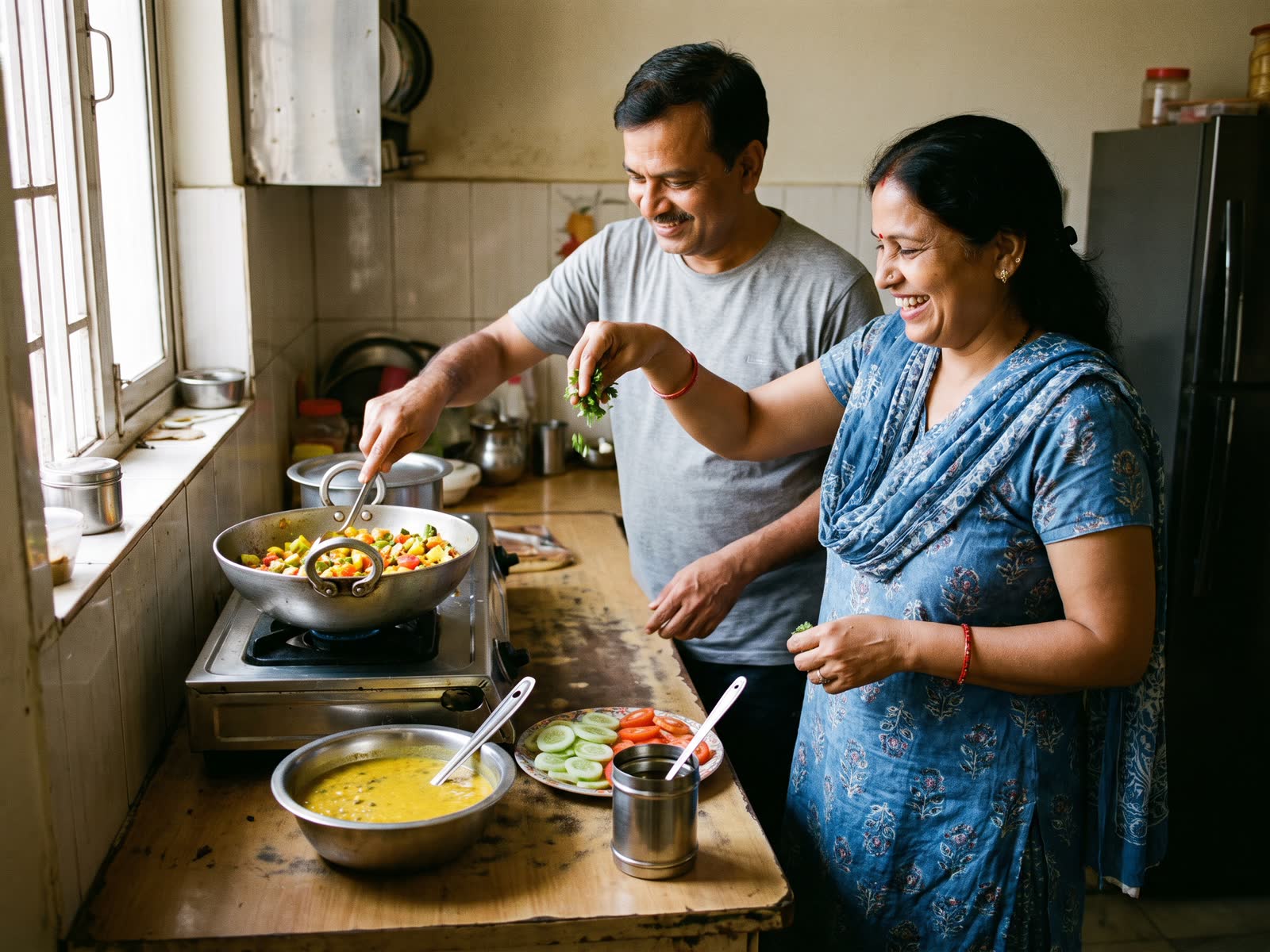
Five swaps do most of the work. Notice what isn’t on the list: dal, sabzi, curd and paneer.
- Cola, packaged juice, sweet lassiWater, unsweetened nimbu pani, chaas
Two or more sugary drinks a day nearly doubled gout risk in men, and more than doubled it in women.3,4
- BeerSkip it, or keep alcohol rare
Each daily beer meant 49% higher gout risk. Wine showed no clear link.5
- Mutton, liver, kidneyDal, eggs, paneer, curd
The most meat meant 41% higher gout risk. The most dairy meant 44% lower.6
- Prawns, crab and other seafood, oftenSeafood as a small, occasional portion
The most seafood meant 51% higher gout risk.6
- Crash dietsSlow, steady weight loss
Losing extra weight helps; going hungry to get there fast isn’t advised.10
Myths
What your relatives might tell you
They say
“Stop dal, rajma and chana. Pulses are full of purines.”
They say
“Palak, gobhi and mushrooms cause gout.”
Actually
They were among the vegetables that didn’t raise risk. Keep eating your greens.7
They say
“A high number means you need tablets.”
They say
“It’s all because of what you eat.”
Actually
Genes explain far more of the difference between people than diet does. Drinks, alcohol and weight still move your number.9
The next 12 weeks
One habit at a time
Change the drinks first. They’re the strongest link in your diet.
Weeks 1–2
Swap the drinks
Water instead of sugary drinks, juice and beer.
Weeks 3–6
Move most days
A brisk 30-minute walk, five days a week. Lose extra weight slowly.
Weeks 7–10
Fix the plate
Meat and seafood smaller and rarer; more dal, sabzi and curd. A diet like this lowered uric acid within 30 days in a trial.13
Weeks 11–12
Retest
At the same lab, and not during or just after a gout attack or fever, which can pull the reading down.14
No guideline fixes a retest date for a high number without symptoms. Twelve weeks gives new habits time to show.
See a doctor soon if
- A joint suddenly turns hot, red, swollen and very painful, often the big toe.
- You get severe pain in your side or back, or blood in your urine.
- You have a fever with a swollen joint. That needs care the same day.
- Your uric acid keeps rising across tests, or you also have diabetes, high BP or kidney disease.
Some medicines, like certain BP tablets, can raise uric acid. Don’t stop any medicine on your own; ask your doctor.
This page explains a lab number. It isn’t a diagnosis. Your doctor reads it with your history, other tests and medicines.