Skip to content

Vitamin D low, in a country full of sun? You’re not alone.

Labs, guidelines and doctors disagree on what “low” means. Here’s how to read your number, and why more isn’t always better.

6 min read · Updated

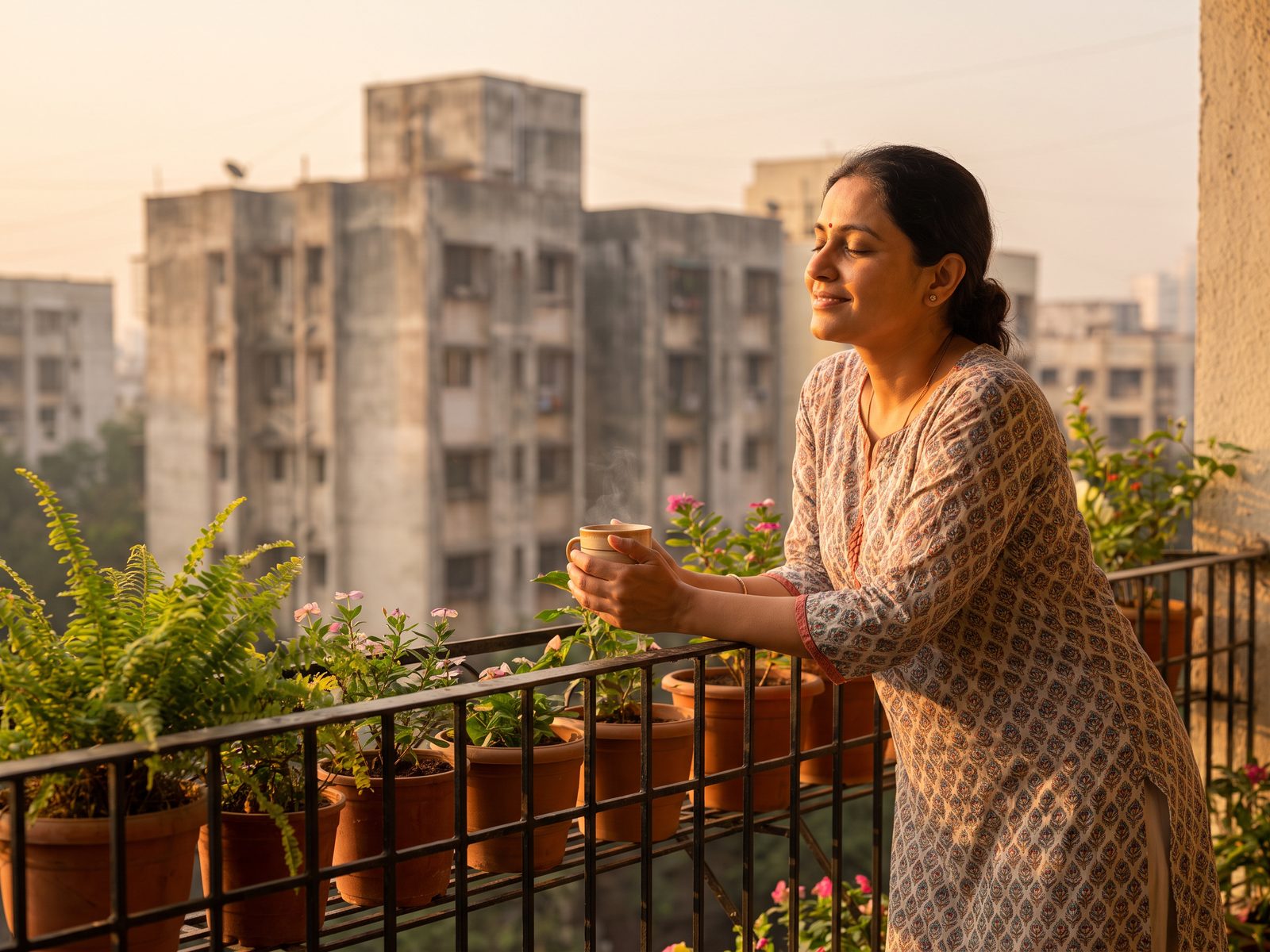
A woman in a printed kurta leans on her balcony railing in the morning sun, eyes closed, holding a cup of chai among potted plants.

The short version

  1. 1

    About 2 in 3 Indian adults test as deficient, sunshine and all. Darker skin, indoor lives, pollution and winter all play a part.11,14,17

  2. 2

    Labs disagree on “normal”. The US National Academies say 20 ng/mL is enough for nearly everyone; the 30 line many reports print was dropped by the Endocrine Society in 2024.1,5

  3. 3

    More isn’t better. Delhi doctors reported 16 cases of vitamin D toxicity, all from prescribed mega-doses. Your doctor decides the dose.19

Your number

Where does your vitamin D sit?

Slide the dot to the 25-OH vitamin D on your report.

18ng/mL

Low for some

12–20: some people may not have enough. Many Indian labs print this as deficient. Your doctor weighs it against your symptoms and risks.

Slide to your own number. 25-hydroxy vitamin D. Multiply ng/mL by 2.5 for nmol/L.1,5,20

Your report

Why labs print different cut-offs

US National Academies, 2011
Under 12 is at risk, 12–20 is low for some, 20 or more is enough for nearly everyone, and above 50 is a concern. They warned that higher cut-offs overstate how many people are short.1,2
Endocrine Society, 2011
Under 20 deficient, 21–29 insufficient, 30 or more sufficient: the bands many labs still print.3
Endocrine Society, 2024
Dropped those 30 and 20–30 definitions, and now suggests against routine testing unless there’s a reason to test.4,5
An Indian review, 2026
Argues that 12 ng/mL fits Indians best, and warns against mass screening and supplementing people without symptoms.20

India

Low, in a sunny country

67%
of Indian adults were deficient across 65 studies, in a 2021 analysis.11
59%
of 26,346 people at Gurgaon health check-ups were below 20 ng/mL, more so in winter and spring.12

Levels run higher in South India, but deficiency was common whatever people’s sun exposure.13

Why

Why so many Indians run low

Skin
Melanin is a natural sunscreen, so darker skin makes less vitamin D from the same sun.9,14
Indoor, covered lives
Clothes cover most skin, sun rarely reaches inside crowded city homes, and SPF 15 sunscreen blocks over 95% of the light that makes vitamin D. In Pune, deficiency was 34% in the city against 13% in villages.14,15,21
Pollution
Toddlers in polluted Mori Gate, Delhi, averaged 12.4 ng/mL, against 27.1 in less polluted Gurgaon.17
Winter in the north
In a Delhi winter, children who got 30 minutes of sun a day for 4 weeks didn’t raise their levels.16
Food
Few foods have much, and Indian milk is rarely fortified: about 0.12 µg per 100 g.14,23
Age and health
Skin makes less as we age. Liver or kidney disease, poor absorption, weight-loss surgery and some seizure and TB medicines lower it too.6,15

Sun

What the sun can and can’t do

11 to 1
is when UVB, the light that makes vitamin D, peaks across India, in every season.16
30 min
of sun, preferably between 11 am and 2 pm, is what ICMR-NIN suggests for children and teens.22

It works, modestly. In a 6-month Pune trial, office-going men who added 20 minutes a day of sun on the face and forearms saw their levels rise a little. Sun on bare skin, outdoors, is what counts; protect your skin if you’re out for long.7,9,18

On your plate

Vitamin D in Indian food

SortShow
Food and servingVitamin D per servingPer 100 g
Hilsa23100 g10 µg10 µgraw
Pomfret, black23100 g5.6 µg5.6 µgraw
Sardine (mathi)23100 g3.5 µg3.5 µgraw
Catla23100 g2.7 µg2.7 µgraw
Desi (country-hen) egg231 egg (45 g)2 µg4.5 µgone region
Mackerel (bangda)23100 g1.4 µg1.4 µgraw
Egg231 egg (50 g)0.4 µg0.8 µg
Buffalo milk231 glass (200 ml)0.3 µg0.2 µg
Cow’s milk231 glass (200 ml)0.3 µg0.1 µg
ICMR-NIN’s food tables (IFCT 2017). Several fish values come from one or two regions. Amounts in food, not doses.23

Vegetarians will find it hard to get much from food alone, unless a food has vitamin D added: check the label. Mushrooms can carry some, but the amount swings hugely with how much light they got; IFCT tested a single sample.8,14,23

Myths

What you might hear

  • They say

    “India is sunny, so I can’t be low.”

    Actually

    About 2 in 3 Indian adults test as deficient. In Gurgaon, 59% were below 20 ng/mL.11,12

  • They say

    “Early-morning sun at 7 am is best for vitamin D.”

    Actually

    UVB peaks between 11 am and 1–2 pm. From 7 to 11 am, sunlight is about 40% of its 11-to-3 strength.15,16,18

  • They say

    “A glass of milk will fix it.”

    Actually

    Indian milk is rarely fortified, and plain milk has about 0.12 µg per 100 g.14,23

  • They say

    “Below 30 means I’m deficient.”

    Actually

    The US National Academies say 20 or more is enough for nearly everyone. The Endocrine Society dropped its 30 line in 2024.1,5

  • They say

    “Everyone needs a vitamin D test every year.”

    Actually

    The Endocrine Society (2024) suggests against routine testing without a reason.4

  • They say

    “More vitamin D is always safer.”

    Actually

    Delhi doctors reported 16 toxicity cases, all from prescribed mega-doses. Levels above 50 are already a concern.1,19

See a doctor soon if

  • You’re on high-dose vitamin D sachets or injections and feel sick or vomit, lose your appetite, get constipated, feel weak or confused.
  • You have bone pain in your back, ribs, hips or legs, or weak muscles that make stairs or getting up from a chair hard.
  • You break a bone after a minor fall.

In the Delhi toxicity cases, blood levels reached a median of 371 ng/mL, with confusion, pancreatitis and kidney injury. Any supplement, and its dose, is your doctor’s call.
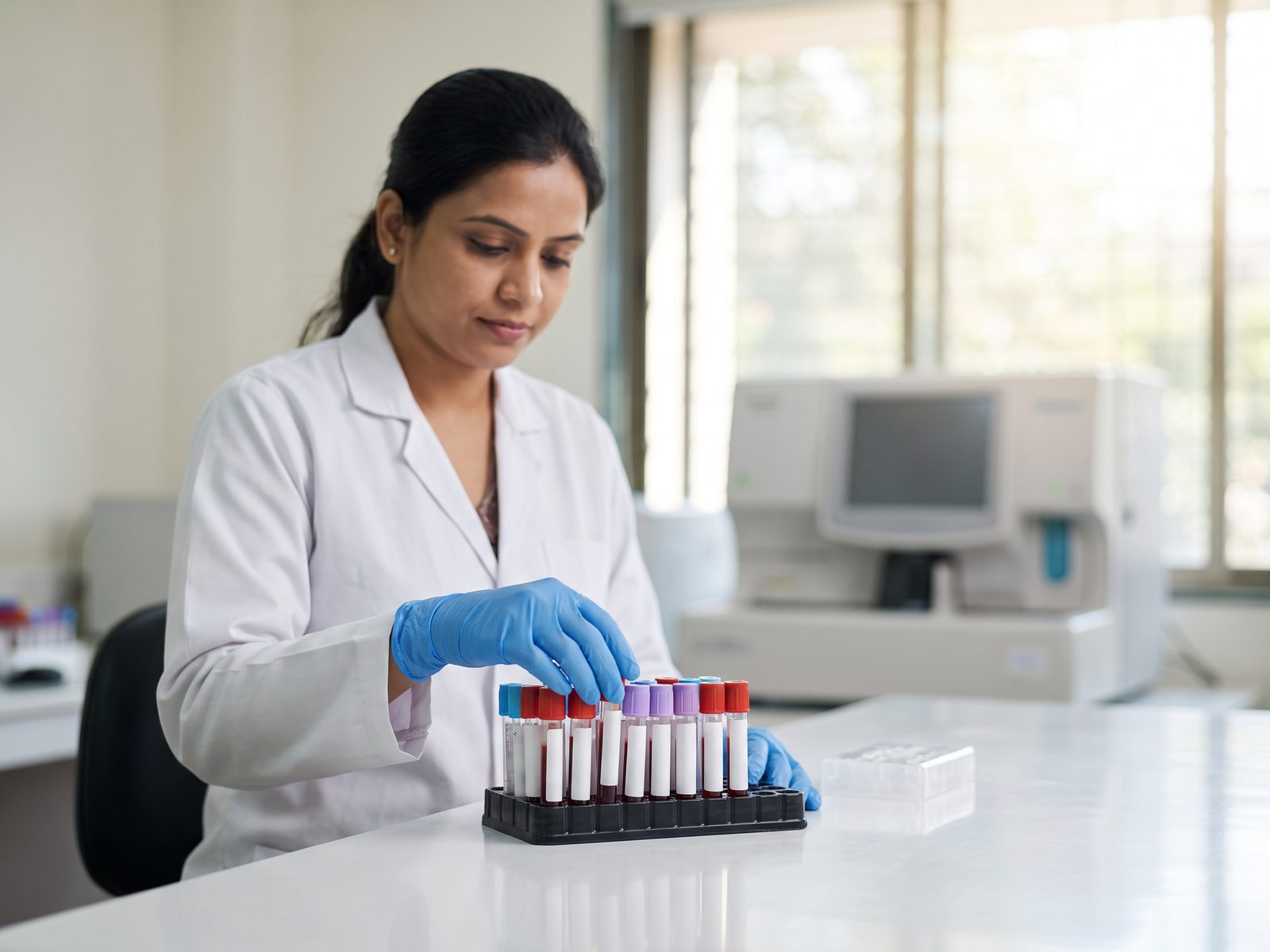

Warning signs from MedlinePlus and the NHS.7,8,10,19

Questions

Questions people ask

Vitamin D kam hai to kya karein, dhoop kitni der lein? (My vitamin D is low: how long should I sit in the sun?)

ICMR-NIN suggests about 30 minutes, preferably between 11 am and 2 pm. In a Pune trial, 20 extra minutes a day on the face and forearms gave a modest rise. Winter sun in north India does little. Any supplement, and its dose, is your doctor’s call.

What is a normal vitamin D level?

It depends on the guideline. The US National Academies say 20 ng/mL (50 nmol/L) or more is enough for almost everyone. Many labs still use 30 ng/mL as “sufficient”, a cut-off the Endocrine Society dropped in 2024.

What does “insufficient” mean on my report?

On many reports it means 20–29 ng/mL, from the Endocrine Society’s 2011 bands. The National Academies call 12–20 the zone where some people may not have enough. 20–29 is not a disease label.

Why am I low when I live in India?

The usual reasons are darker skin, covered clothing, an indoor city life, pollution, winter and a diet with little vitamin D.

Can I get vitamin D from food alone?

It’s hard, especially for vegetarians: milk has very little unless fortified. Fatty fish such as hilsa and pomfret and egg yolk help; mushrooms vary a lot.

Can too much vitamin D harm me?

Yes. Delhi doctors reported toxicity from prescribed mega-doses, with vomiting, confusion and kidney injury. Don’t take high-dose sachets or injections without your doctor.

Sources

  1. 1.Institute of Medicine. Dietary Reference Intakes for Calcium and Vitamin D: summary, 2011.
  2. 2.Ross AC et al. The 2011 report on dietary reference intakes for calcium and vitamin D from the IOM. J Clin Endocrinol Metab, 2011.
  3. 3.Holick MF et al. Evaluation, treatment and prevention of vitamin D deficiency: an Endocrine Society guideline. J Clin Endocrinol Metab, 2011.
  4. 4.Demay MB et al. Vitamin D for the prevention of disease: an Endocrine Society clinical practice guideline. J Clin Endocrinol Metab, 2024.
  5. 5.McCartney CR et al. Vitamin D insufficiency and epistemic humility: an Endocrine Society guideline communication. J Clin Endocrinol Metab, 2024.
  6. 6.MedlinePlus: 25-hydroxy vitamin D test.
  7. 7.MedlinePlus: Vitamin D test.
  8. 8.MedlinePlus: Vitamin D.
  9. 9.NHS: Vitamins and minerals, vitamin D.
  10. 10.NHS: Rickets and osteomalacia.
  11. 11.Siddiqee MH et al. High prevalence of vitamin D deficiency among South Asian adults: a meta-analysis. BMC Public Health, 2021.
  12. 12.Shukla K et al. Prevalence of vitamin D deficiency in an ostensibly healthy Indian population. Indian J Clin Biochem, 2016.
  13. 13.Selvarajan S et al. Systematic review on vitamin D level in apparently healthy Indian population. Indian J Endocrinol Metab, 2017.
  14. 14.G R, Gupta A. Vitamin D deficiency in India: prevalence, causalities and interventions. Nutrients, 2014.
  15. 15.Harinarayan CV et al. Vitamin D status and sun exposure in India. Dermato-Endocrinology, 2013.
  16. 16.Marwaha RK et al. Regional and seasonal variations in UVB irradiation and vitamin D synthesis in India. Osteoporos Int, 2016.
  17. 17.Agarwal KS et al. The impact of atmospheric pollution on vitamin D status of infants and toddlers in Delhi. Arch Dis Child, 2002.
  18. 18.Patwardhan VG et al. Increased sunlight exposure versus vitamin D supplementation in Indian vitamin D deficient men: a randomised trial. Indian J Endocrinol Metab, 2017.
  19. 19.Kaur P, Mishra SK, Mithal A. Vitamin D toxicity resulting from overzealous correction of vitamin D deficiency. Clin Endocrinol, 2015.
  20. 20.Laik JK et al. Vitamin D deficiency in India: a global myth imposed locally? Cureus, 2026.
  21. 21.Ghonge S et al. Deficiencies of serum vitamin D3 and vitamin B12 among urban and rural population in and around Pune. J Family Med Prim Care, 2025.
  22. 22.ICMR-NIN. Dietary Guidelines for Indians, 2024.
  23. 23.Longvah T et al. Indian Food Composition Tables 2017. ICMR-NIN.

Swastya shares health education, not medical advice. Lab ranges vary by lab, age and condition, so read your numbers with your doctor, and see a doctor promptly for any symptom that worries you.

Got a report with a flag? Ask Aira.

Send your lab report on WhatsApp. Aira explains every number in plain words, in your language, and Teresa helps you build one habit at a time, for 12 weeks.